The State of the Music Business 2026: Why the Old Industry Playbook No Longer Works
The music business has never had more tools, more music, or more advice. And yet, artists are more confused about what actually builds a career.
The problem is not a lack of opportunity. It is that the system surrounding the opportunity has fundamentally changed. The old path was imperfect, expensive, and controlled by gatekeepers, but it was recognizable. Artists were discovered, developed, funded, marketed, and distributed through an industry infrastructure built around turning music into careers.
That path is gone. In its place is an ecosystem of streaming platforms, social algorithms, content demands, touring costs, paid media, direct-to-consumer strategies, AI tools, and an endless stream of new places artists are told they need to show up.
This matters because artists are increasingly making career decisions inside a system they were never taught how to navigate. The game is still being played. The rules are different. And nobody really told the artist.
Quick Answer: What Is Happening to the Music Business?
The music industry has shifted from a relatively linear system into a fragmented one. Discovery can happen anywhere, attention can arrive before artist development, and millions of impressions do not necessarily create meaningful fandom.
At the same time, music media has weakened, social platforms increasingly control discovery, touring has become more expensive, and direct-to-consumer is often promoted before artists have built audiences willing to buy.
The result is not simply a marketing problem. It is a systems problem. Building a sustainable music career in 2026 requires strategies based on an artist’s actual career level, audience behavior, resources, and goals rather than a universal industry playbook.
Explore the Visual Report
The Path Is Gone
There used to be a recognizable path through the music business:
Discovery → Genre → Budget → Press/Radio → Physical Sales → Streaming → Tour → Merch → Success
It wasn’t equally accessible, and it certainly wasn’t always fair, but the pieces had recognizable roles. Now, those pieces have exploded outward. Discovery competes with algorithms. Radio competes with streaming. Press competes with social. Artists are navigating TikTok, Meta, content, ads, AI, touring, merch, and deal structures simultaneously. Somewhere inside all of that is a question mark where success used to sit.
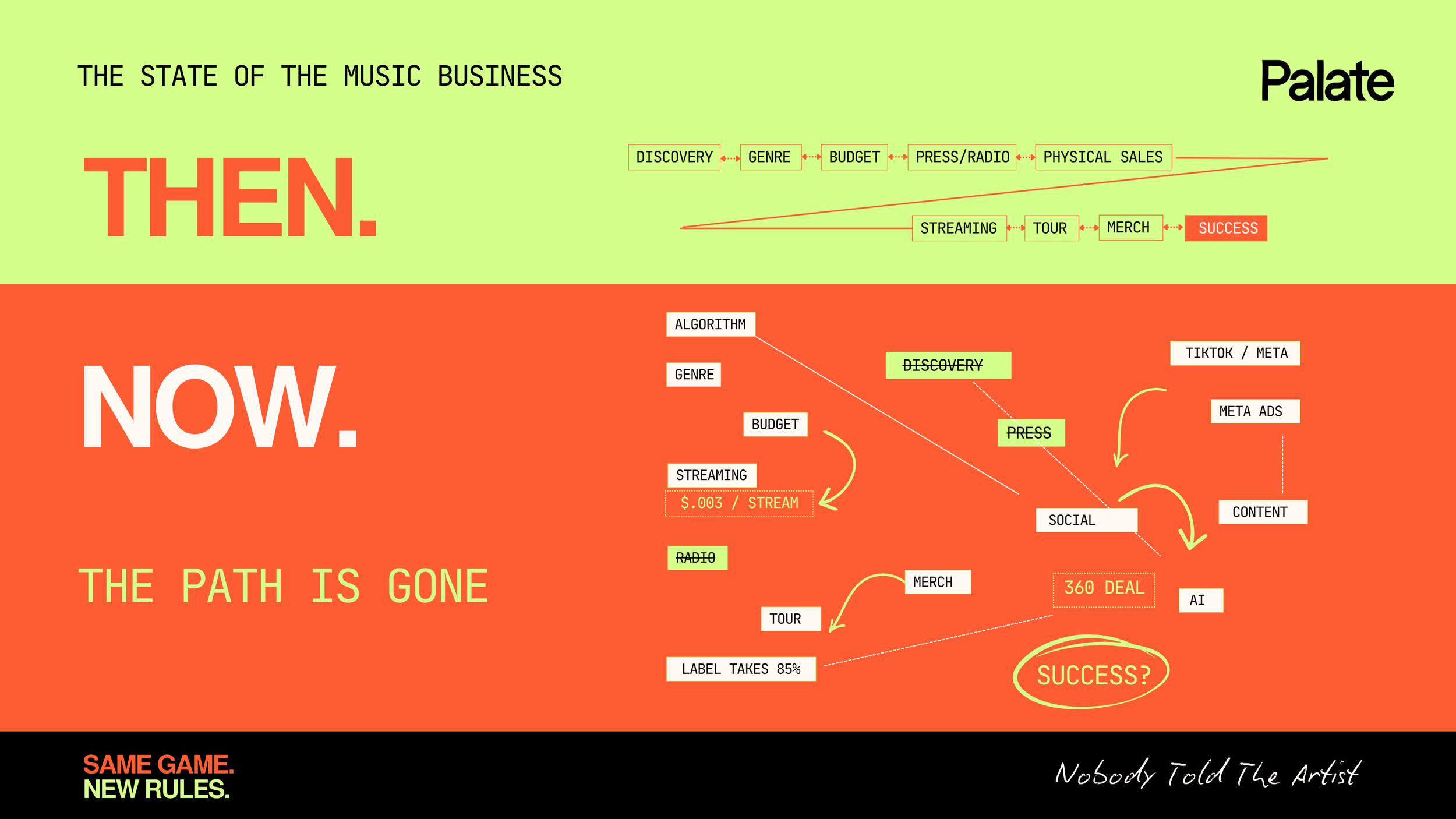
This is why so much music-industry advice feels contradictory. There is no longer one pathway everyone is moving through. An artist can have millions of views and almost no ticket buyers, while another can have modest streaming numbers and a deeply committed live audience.
The metrics are visible. The career underneath them is harder to see.
Where Did the Media Go?
A press run once helped build an artist’s story. Interviews, profiles, reviews, and performances gave audiences context. At their best, they helped explain who an artist was and why their work mattered.
That ecosystem has fractured. Artists now move between Apple Music, Spotify, YouTube, Amazon, Instagram, TikTok, podcasts, playlist covers, and an expanding universe of performance platforms. The opportunities are everywhere, but the storytelling isn’t.
There are artists who demonstrate how valuable context still is. Chappell Roan’s rise was not only about individual songs reaching people; her visual identity, performances, interviews, live show, and clearly defined point of view gave audiences a larger world to enter. The music traveled, but so did the artist.
Being present everywhere can look like having a strategy. It isn’t necessarily the same thing.
The Algorithm Is the A&R
Algorithms can surface an artist to millions of people before the traditional industry has even noticed them. But discovery and attachment are different things.
A platform can make someone encounter a song. It cannot guarantee they will care about the artist who made it. That creates a strange dynamic for artists and labels: enormous activity can appear before anyone knows whether it represents a real audience.
TikTok has repeatedly demonstrated how quickly catalog songs, new releases, and relatively unknown artists can reach enormous audiences. But the artists who benefit beyond the viral moment are usually the ones able to give newly arriving listeners somewhere to go next.
When the algorithm moves on, what remains? The danger is building a business around moments instead of artists.
Artists Are Competing With Everything
Music does not live in a music-only environment anymore. A music video can appear directly beside behind-the-scenes footage, a tour recap, a comedy clip, a recipe, or whatever else an algorithm believes someone will watch next.
The platform does not particularly care that one piece of content represents months of artistic work. It cares whether someone keeps scrolling. AI adds another layer, with the same technology ecosystem distributing artists’ work increasingly telling audiences they can generate music themselves.
The competition for attention is no longer simply another artist releasing on Friday. It is everything on the screen.
That makes a distinctive artist identity more valuable, not less. Artists like Tyler, the Creator have demonstrated the power of building recognizable worlds that extend beyond individual releases. The music, visual language, fashion, live experience, and products reinforce one another rather than functioning as disconnected marketing assets.
Touring in This Economy
Touring has traditionally been treated as one of the most dependable ways to convert fandom into a real-world business. But flights cost more. Production costs more. Transportation costs more. Fans have tighter budgets of their own.
Touring strategy therefore needs to reflect the artist’s actual level. An established artist may be able to turn the show into a premium experience. A developing artist may benefit more from support slots and co-headlining. For an emerging artist, a strategic opening slot, intimate event, party, or strong hometown show may accomplish more than an expensive run of half-empty rooms.
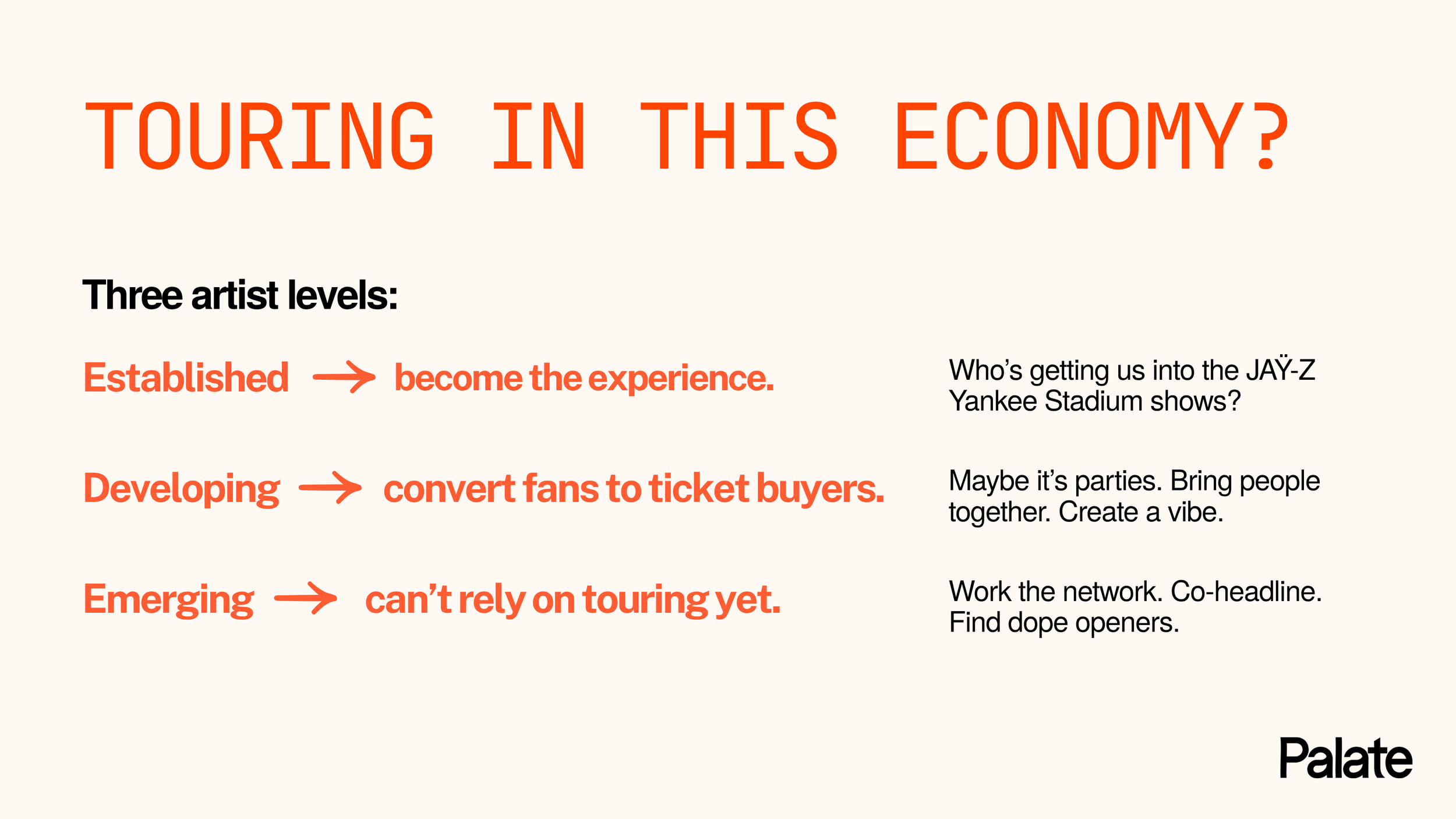
The point isn’t that artists shouldn’t tour. It’s that “go on tour” is not a strategy by itself.
The Direct-to-Consumer Myth
Direct-to-consumer has become one of the industry’s favorite answers to platform dependency. In theory, it makes sense: own the audience relationship instead of relying entirely on streaming and social platforms.
The problem is that having a Shopify store is not the same as having an audience trained to buy.
Artists with powerful direct-to-consumer businesses generally spent years building trust, identity, taste, and purchasing behavior. Tyler, the Creator is a useful example: Golf Wang works because products have long been integrated into the world surrounding the artist. The audience relationship existed before the transaction.
You cannot copy and paste that relationship. For many artists, direct-to-consumer is currently less of a strategy than a store and hope.
Who’s Paying Your Rent?
There is another part of artist development the industry rarely talks about plainly enough: How is the career being funded?
An artist may be living from music income, working a job that funds the music, receiving support from family or a partner, using savings, or operating with outside investment. Those situations create completely different decision-making environments.
When every release needs to immediately cover basic living expenses, creative and strategic decisions become survival decisions. That affects how long an artist can develop, how much risk they can take, and which deals they may be willing to accept.
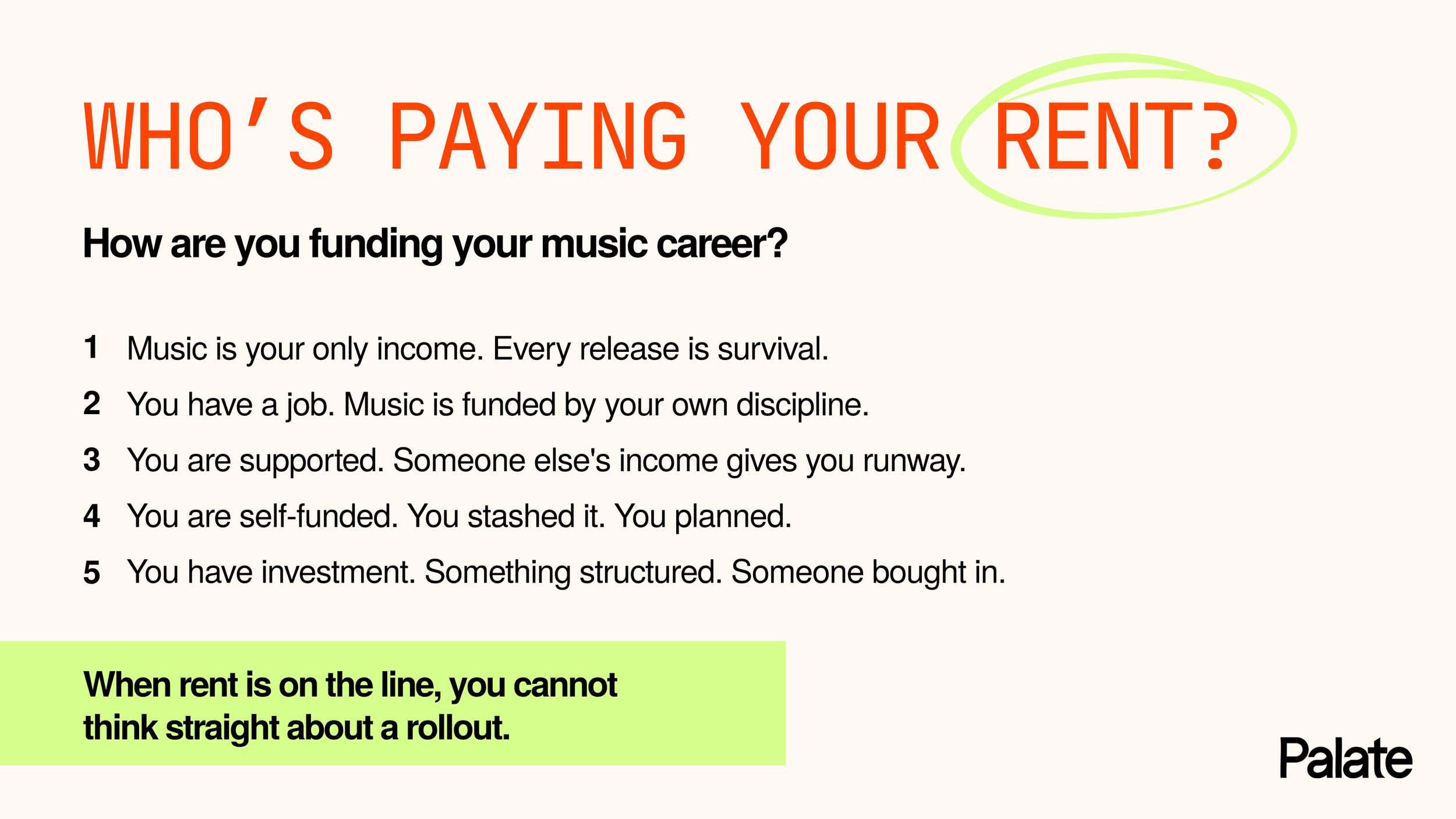
Funding isn’t separate from artist strategy. It determines how much runway an artist has to build one.
Genre Is Still a Business Decision
Genre has become increasingly fluid culturally. The business around genre has not necessarily evolved at the same speed.
Two artists can make music in similar sonic territory and still be positioned, funded, and marketed very differently. Genre influences competition, which teams understand the artist, which opportunities open first, and the amount of money the industry believes the artist is worth investing.
That makes genre more than a sound. It is also a budget conversation. Artists and teams need to understand not only what the music sounds like, but how the industry is likely to categorize and value it.
This Is a Systems Problem
None of these challenges exists independently. Algorithms can create attention before an artist has developed the infrastructure to turn it into anything lasting. Direct-to-consumer can be prescribed before consumer behavior exists. Touring can be recommended before the economics make sense. Genre and funding can establish completely different ceilings for two artists receiving otherwise identical advice.
Yet artists are routinely handed the same checklist: release more music, make more content, post consistently, run ads, tour, sell merch, collect emails, launch a store.
More activity does not automatically create more strategy.
The better question isn’t, “What should artists be doing in 2026?” It is, “What does this artist need next?”
Common Mistakes Artists and Teams Make
One of the biggest mistakes is treating every available tool as a requirement. Artists do not need to execute every strategy simultaneously. They need to understand which problem they are actually trying to solve.
Another is confusing visibility with fandom. A spike in views or streams is valuable, but it should trigger a second question: What are we giving these people a reason to care about next?
Teams also frequently introduce monetization too early. Touring, merch, and direct-to-consumer work best when audience behavior supports them. Building the infrastructure before building the demand does not create demand.
Finally, artists often copy strategies from artists operating at completely different career levels. What works for a global artist with millions of fans, significant capital, and years of audience trust may be completely wrong for an emerging artist.
A 2026 Artist Strategy Checklist
Before adding another platform, campaign, or tactic, artists and teams should be able to answer:
Who is the audience? Do we know who is actually paying attention and why?
What stage is the artist at? Emerging, developing, established, or somewhere between?
Where is discovery happening? And does that attention travel beyond the platform where it started?
What creates attachment? What makes someone care about the artist rather than a single song?
How is the career funded? How much runway actually exists?
What is the audience ready to buy? Music, tickets, products, experiences, or nothing yet?
Does touring make economic sense? Or is there a more strategic way to build a live audience?
How is the artist positioned? What does genre communicate to audiences and industry partners?
What is the next actual problem to solve? Not what everyone else is doing. What does this artist need next?
Key Takeaways
The old music-industry pathway has fragmented, but that does not mean opportunity has disappeared. Discovery is more accessible than ever, while converting discovery into lasting fandom has become more complicated.
Algorithms can create attention, but they cannot create artist identity for you. Touring and direct-to-consumer remain powerful tools, but neither works universally. Funding and genre are strategic considerations, not background details. Most importantly, artists at different stages should not be following identical playbooks.
The future of artist development will be less about doing everything and more about understanding which systems need to work together for a specific artist.
Frequently Asked Questions
How do artists build a career in the music industry in 2026?
Start by identifying the artist’s actual career stage, audience behavior, resources, and goals. Strategy should solve the artist’s next problem rather than replicate a universal rollout template.
Do artists still need record labels?
Not necessarily, but independence does not eliminate the functions labels historically provided. Funding, marketing, distribution, strategy, relationships, and infrastructure still have to come from somewhere, whether that is a label, independent team, outside partners, or the artist.
Is TikTok still important for musicians?
Social platforms remain powerful discovery tools, but discovery should not be mistaken for fandom. The larger strategic question is whether attention generated on a platform can be converted into an ongoing relationship with the artist.
Should emerging artists go on tour?
Not automatically. Touring should reflect demonstrated audience demand and available resources. For some emerging artists, support slots, local shows, parties, or intimate events may be more effective and financially sustainable.
Is direct-to-consumer the future of music?
It is an important opportunity, but D2C works best when an artist has already developed audience trust and purchasing behavior. A storefront alone does not create a direct-to-consumer business.
What is the biggest challenge facing artists today?
Fragmentation. Artists have more tools and access than previous generations, but fewer universally reliable pathways for turning attention into sustainable careers.
So What Comes Next?
The important question isn’t how to recreate the old music business. It’s what the new model should be.
Answering that requires rethinking artist development, rollout strategy, audience ownership, marketing, funding, and the relationship between artists and their partners as interconnected pieces rather than separate conversations.
The path may be gone. The opportunity isn’t. But building a career in this version of the music business requires understanding the system you’re actually operating in, not the one the industry remembers.
And that is where the next conversation begins.
