
Artist Branding 101: Why Hair Is One of Music’s Most Powerful Branding Tools
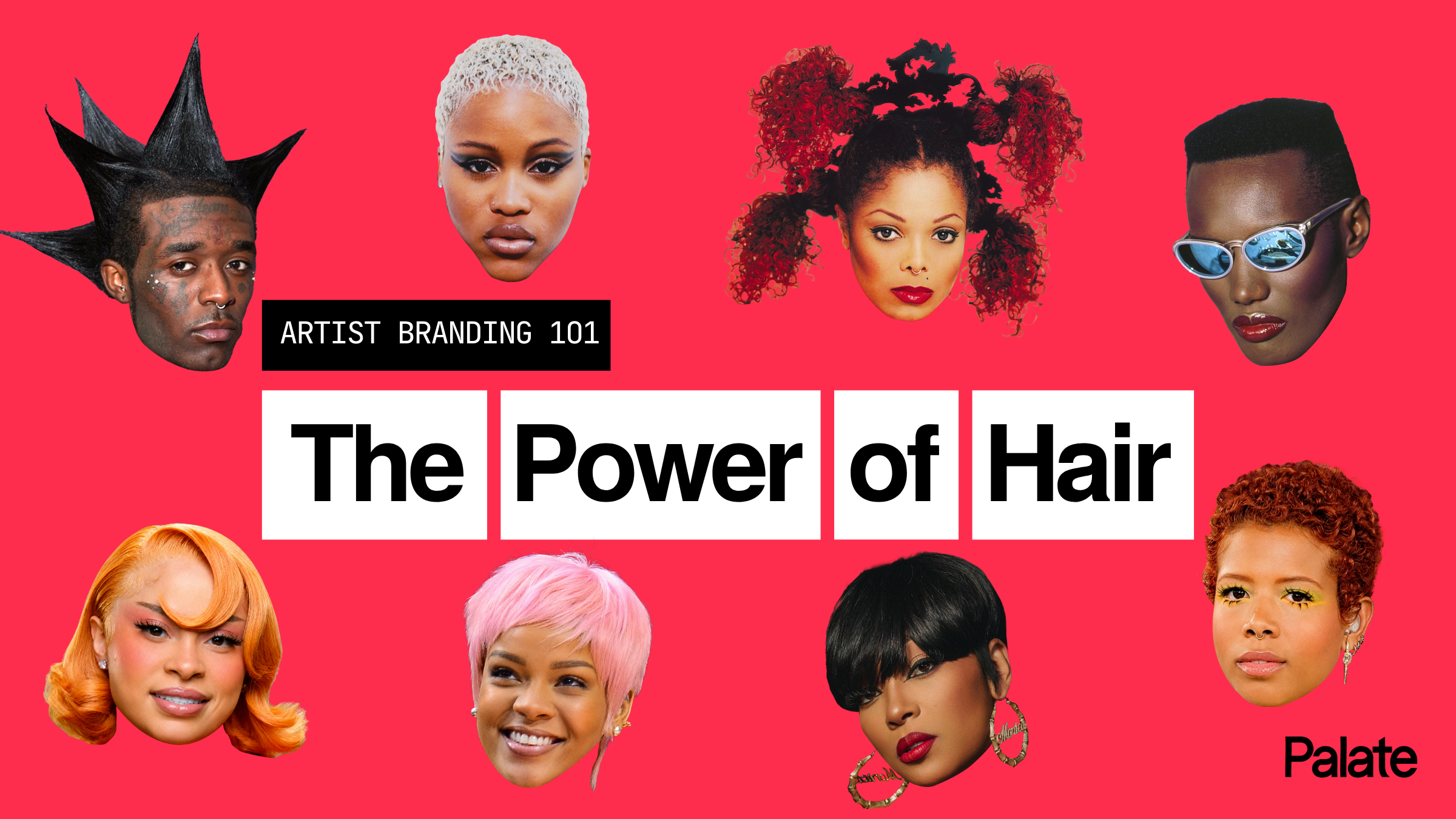
Before an artist sings a note, audiences are already receiving information. The silhouette, styling, makeup, clothes, and often, the hair all begin communicating identity before the music has a chance to.
Hair can become one of the fastest visual shortcuts between an artist and an audience. A distinctive color, cut, texture, or silhouette can make someone recognizable before their face is fully visible—or before a viewer even knows which song is playing.
That makes hair more than beauty. For artists, it can become part of the brand.
From Grace Jones’ flat top to Janet Jackson’s red Velvet Rope era, music history is filled with hairstyles that became inseparable from the artists and moments they represented. The strongest examples don’t simply look good. They communicate identity.
Quick Answer: How Can Hair Build an Artist Brand?
Hair becomes part of an artist brand when it creates recognizable visual signals that audiences repeatedly associate with the artist. A distinctive cut, color, texture, silhouette, or approach to styling can strengthen recognition across performances, music videos, photography, social media, and everyday appearances.
It can also become a storytelling device. A dramatic change in hair can introduce a new album era or identity before the music itself explains what has changed. In other cases, consistency can make a particular silhouette so closely associated with an artist that audiences recognize the reference immediately.
The goal isn’t to have unusual hair. It’s to make visual choices that help the audience recognize—and remember—the artist.
Explore The Power of Hair Visual Report
Hair Is Branding
Artist branding is built through repeated signals. Over time, audiences learn what belongs to an artist: certain colors, silhouettes, styling choices, accessories, makeup, and hairstyles. When those signals become familiar enough, recognition can happen almost instantaneously.
Diana Ross demonstrates how powerful that association can become. Her volume and texture are not simply beauty references; they contribute to a visual identity that remains recognizable across decades.
That distinction matters. There is a difference between having good hair and having recognizable hair. One is primarily aesthetic. The other has become part of how an audience identifies the artist.
Hair Has No Rules
There is no single formula for what signature hair should look like. Braids, locs, color, curls, a short natural cut, a micro bob, or a dramatic sculptural style can all become part of an artist’s visual language.
Artists including Doechii, Chlöe, Tierra Whack, H.E.R., Rapsody, FKA twigs, Syd, and Kelela demonstrate completely different approaches. That’s precisely the point. What makes hair useful as a branding tool isn’t that successful artists share a particular hairstyle; it’s that hair provides another layer of information about who the artist is.
An artist also doesn’t need to choose one hairstyle and keep it forever. A more useful question is: Does the hair feel like it belongs in the same visual world as the artist?
The Blur Test: Can You Recognize the Hair Without the Face?
One of the simplest ways to evaluate an artist’s visual identity is what we call the Blur Test. If you obscure the artist’s face, is there enough visual information left for people to identify them?
Hair can be one of the strongest clues. Aaliyah’s swooped hair and Alicia Keys’ braids demonstrate how hairstyle and silhouette can contribute to recognition even when facial information is removed.
Not every artist needs to pass this test immediately. Instead, think of it as a way to evaluate how much recognizable identity exists beyond the face itself. The stronger the visual signature becomes, the less information the audience needs before making the connection.
The Halloween Test: Can Someone Recreate the Look?
There is an even higher level of recognition: can someone recreate the artist’s look and have other people immediately understand who they’re supposed to be?
Beyoncé dressing as Lil’ Kim demonstrates the idea perfectly. The reference works because the visual language already exists in the audience’s memory. Hair, wardrobe, accessories, and attitude combine into something culturally recognizable.
That’s when artist branding moves beyond the artist’s own imagery. The audience has learned the visual language well enough to reproduce it themselves.
One Hairstyle Can Define an Entire Era
An artist doesn’t necessarily need a permanent signature hairstyle. Sometimes the strongest association happens at the era level.
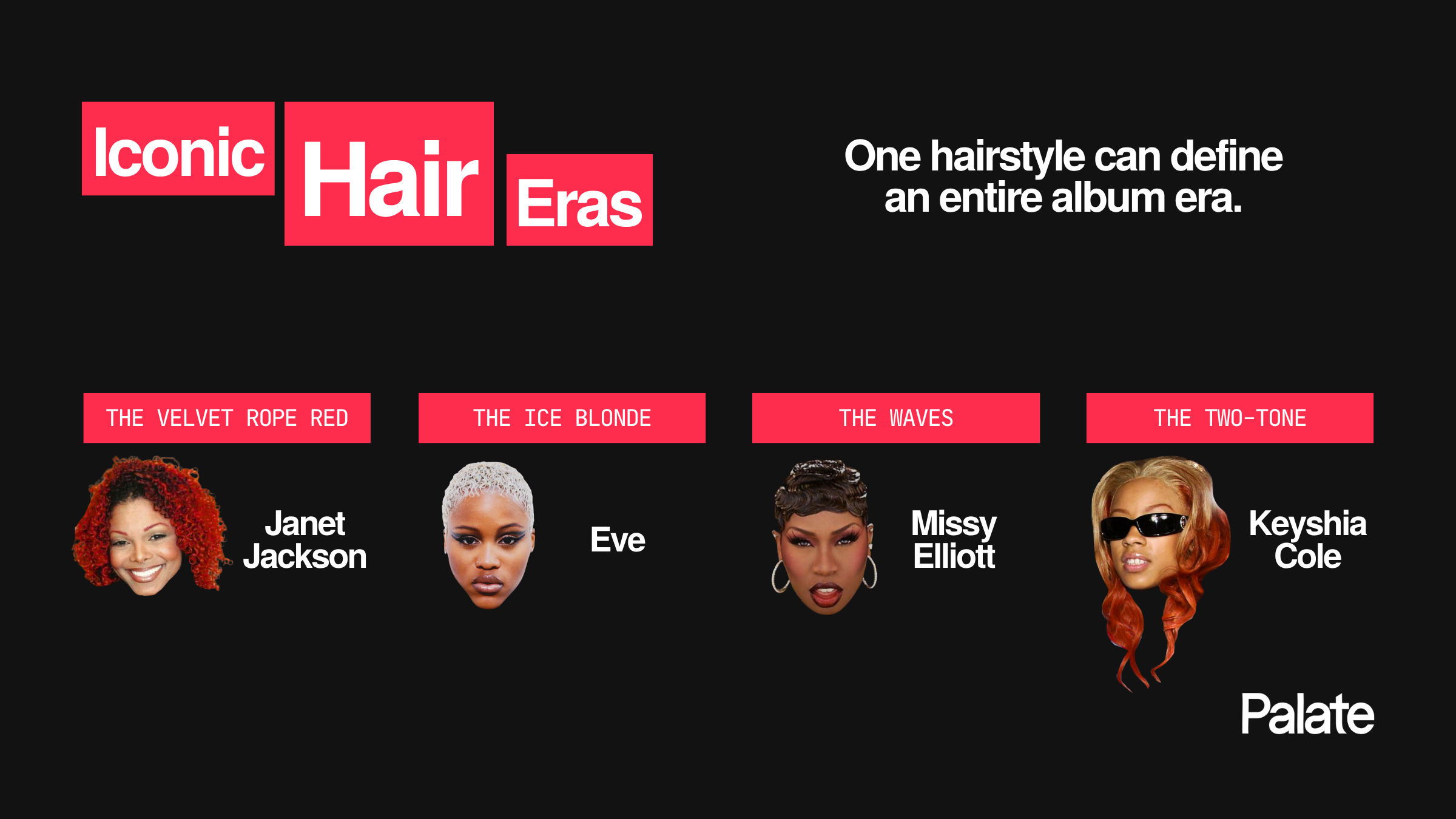
Janet Jackson’s The Velvet Rope red, Eve’s ice blonde, Missy Elliott’s waves, and Keyshia Cole’s two-tone hair each created visual shorthand for a particular moment. Years later, a fan can encounter a similar hairstyle and immediately connect it to an artist, record, or period.
This gives artists room to evolve without abandoning visual consistency. The larger career can contain many different identities as long as each individual era is developed clearly enough for audiences to understand and remember it.
Hair Is Storytelling
Recognition is only one thing hair can communicate. It can also tell audiences that something has changed.
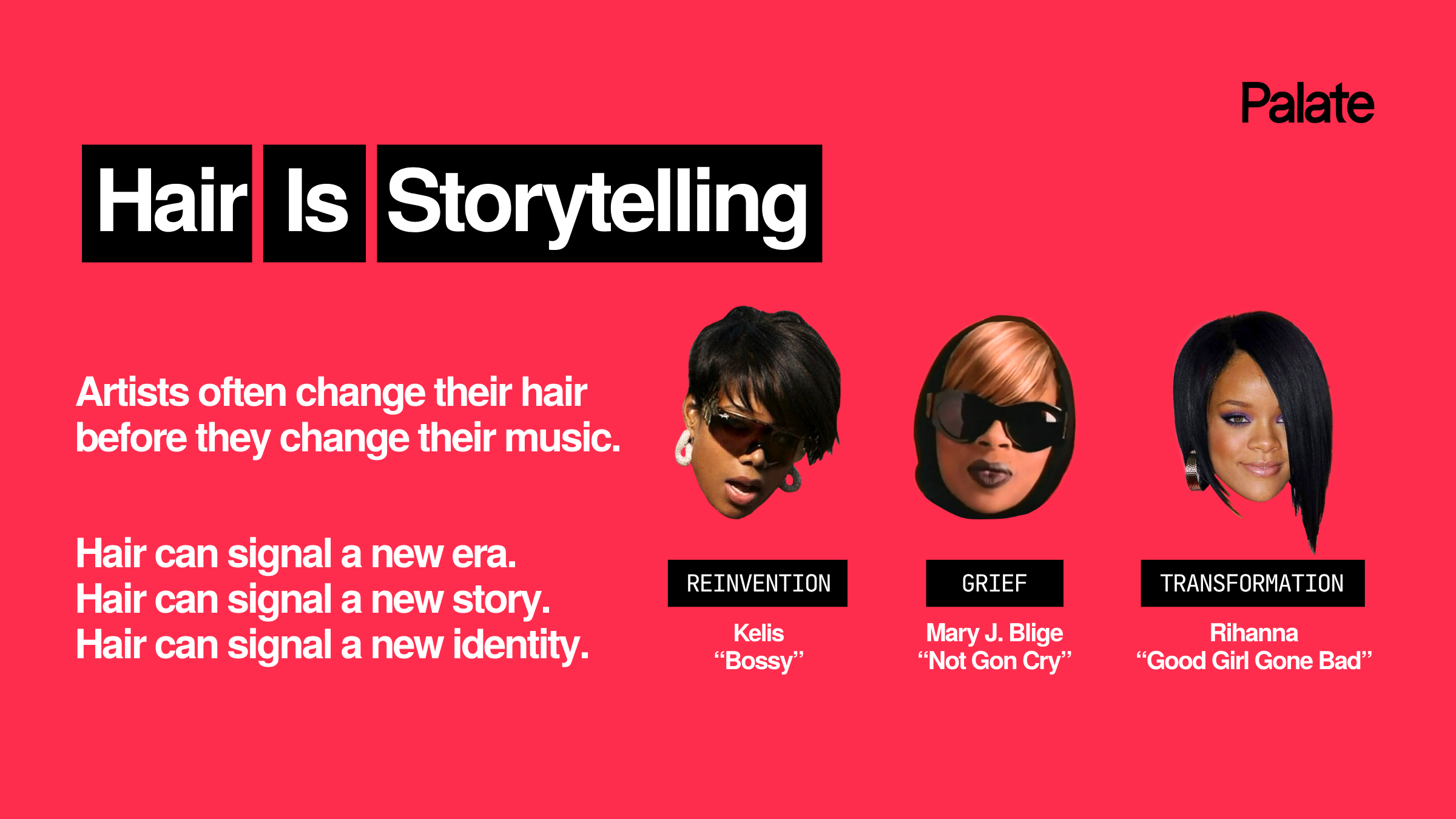
Artists frequently alter their appearance at the same moment their music, story, or public identity begins moving somewhere new. Kelis around “Bossy” can represent reinvention. Mary J. Blige around “Not Gon Cry” can visually accompany grief. Rihanna’s Good Girl Gone Bad transformation demonstrates how dramatically a change in hair can announce a new chapter.
The audience sees the shift before anyone has to explain it. That’s why a significant visual change can be particularly effective at the beginning of a rollout: it creates curiosity. Something looks different, and people want to understand why.
Hair can therefore function as more than a reflection of an era. It can be one of the first signals that a new era has begun.
The Best Hair in the Game Is Recognizable
Contemporary artists continue to demonstrate how many different forms recognizable hair can take. Megan Thee Stallion, Cardi B, Mariah the Scientist, Kash Doll, Tyla, Rico Nasty, and Doja Cat have dramatically different visual approaches.
There is no universal “correct” hairstyle for a music artist, nor should there be. The strongest choices reinforce something that already feels true about the person, the music, or the world they’re building.
Before an artist speaks, the image is communicating. Hair is part of that message.
The Hairstylist Can Become Part of the Brand
Signature looks rarely happen in isolation. Behind many of music’s most recognizable hairstyles are creative collaborators who helped develop, refine, and maintain the visual language over time.
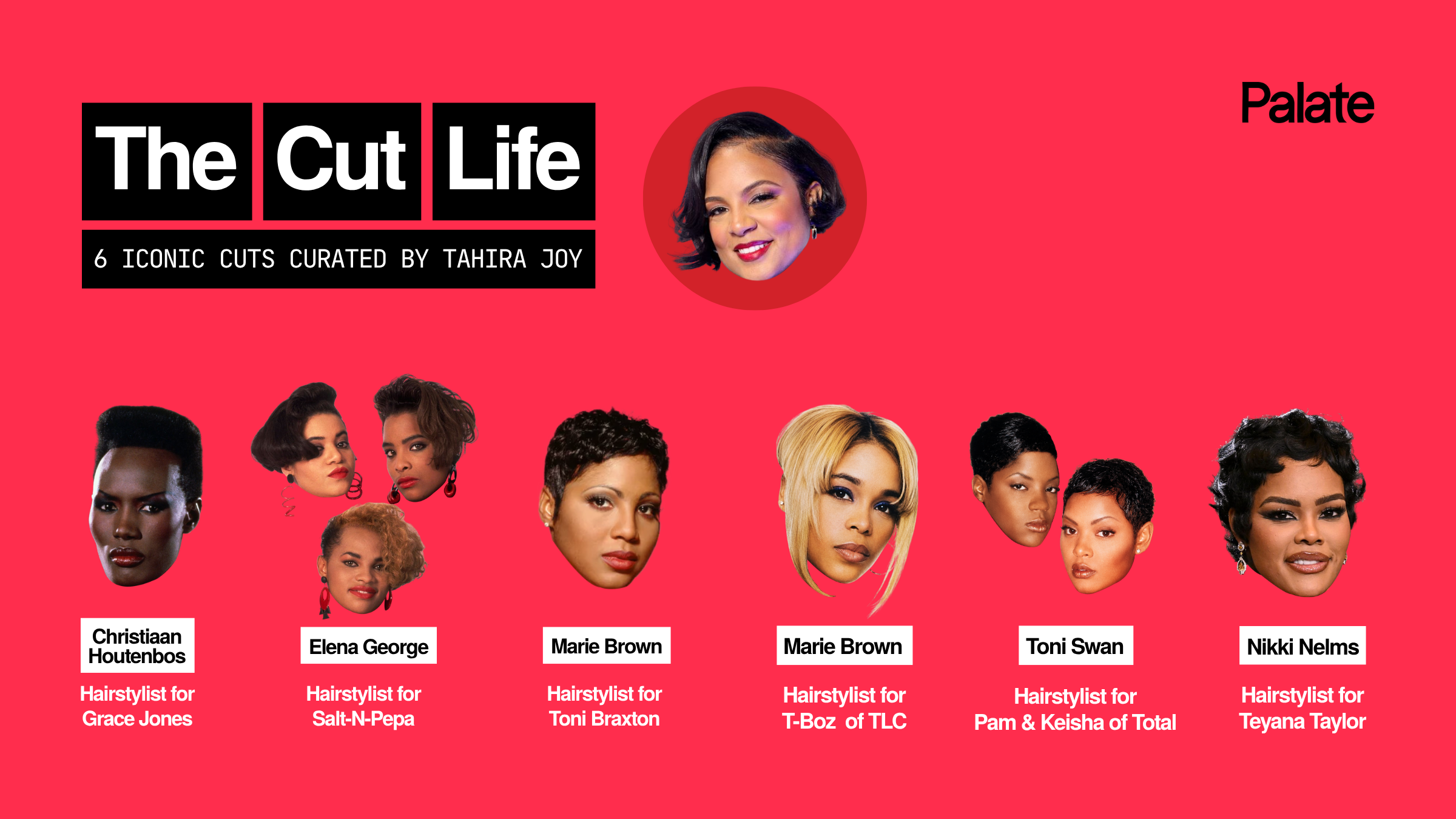
Grace Jones worked with Christiaan Houtenbos. Toni Braxton and T-Boz have connections to Marie Brown. Teyana Taylor has worked with hairstylists including Edith Donaldson and Nikki Nelms, while Salt-N-Pepa’s visual history includes Elena George and Marquis Moss. Pam and Keisha of Total worked with Toni Swan.
These relationships reveal an important part of artist development that audiences rarely see. The right hairstylist isn’t simply executing a requested look; they can become a creative collaborator who understands the artist’s identity well enough to help translate it into recognizable visual codes.
Over time, the right stylist can become part of the brand.
Hair Can Evolve With the Brand
Consistency does not mean staying exactly the same. In fact, for some artists, constant transformation can become the recognizable pattern.
Lil Uzi Vert is a useful example. Colors, lengths, shapes, and visual references continually change, but the experimentation itself feels consistent with the identity. The audience doesn’t necessarily expect one particular hairstyle; they expect transformation.
That’s an important distinction. For one artist, the signature might be a hairstyle. For another, it might be an approach to hair. Both can create recognition as long as the choices feel connected to the larger identity.
The branding principle remains the same: hair evolves with the artist rather than existing separately from them.
The Internet Remembers Hair
An iconic hairstyle no longer lives only in a music video, magazine cover, or red-carpet photograph. It becomes a screenshot, Pinterest reference, TikTok recreation, Halloween costume, or salon request.
“I want the Latto blonde.” “I want the Kash Doll layers.” “I want the Beyoncé Lemonade braids.”
That language is significant because the artist’s name has become shorthand for the look. The audience isn’t simply describing a hairstyle anymore; they’re referencing a visual identity and expecting someone else to understand the association.
That’s when hair becomes bigger than beauty inspiration. It becomes cultural shorthand for the artist.
Common Mistakes Artists Make With Hair and Branding
One common mistake is changing hair simply because a particular style is trending. A trend may make an artist look current without making them any more recognizable. The question shouldn’t only be whether a hairstyle looks good right now, but whether it makes sense within the artist’s larger visual language.
The opposite mistake is assuming that consistency means never changing. Artist brands need room to evolve, and an identity that is too rigid can eventually become limiting. The goal is continuity rather than visual stagnation: even when the hairstyle changes, there should be something about the choice that still feels connected to the artist.
Hair can also become disconnected from the rest of the visual identity. A hairstyle may be striking on its own but make little sense alongside the music, wardrobe, photography, or larger era. Strong image-making happens when those elements are communicating with one another.
Artists can also underestimate the creative role of the hairstylist by treating them purely as a service provider. The right long-term collaborator can help identify what works, develop recognizable codes, and evolve those codes as the artist changes.
Finally, don’t force a “signature hairstyle” simply because branding advice says every artist needs one. The strongest signatures usually feel like an extension of the artist, not a marketing assignment.
The Artist Hair Branding Checklist
Identify hairstyles, colors, textures or silhouettes that already feel natural to the artist.
Look at hair alongside wardrobe, makeup, photography and overall visual identity.
Ask whether the artist remains recognizable when the face is obscured.
Consider whether the hairstyle can create a distinct visual silhouette.
Decide whether consistency should happen across the entire career or within individual album eras.
Use dramatic hair changes intentionally when introducing a new story or era.
Develop relationships with hairstylists who understand the artist’s larger visual identity.
Avoid adopting trends without considering how they support the brand.
Track which hairstyles audiences repeatedly reference, recreate or request.
Allow the hair to evolve as the artist evolves.
Key Takeaways
Hair is not separate from artist branding. It can be one of its most powerful visual tools because it sits at the intersection of recognition, identity, and storytelling. A hairstyle can create a recognizable silhouette, define an album era, communicate transformation, or tell audiences something about an artist before the music begins.
But signature hair doesn’t require one permanent look. Janet Jackson demonstrates the power of an era-specific style. Grace Jones demonstrates the strength of a defining silhouette. Lil Uzi Vert demonstrates how constant experimentation can itself become recognizable.
The strategy changes, but the principle doesn’t. Audiences learn what belongs to an artist through repetition, context, and recognition.
When people start naming the artist instead of the hairstyle, the branding is working.
Frequently Asked Questions
Why is hair important in artist branding?
Hair creates an immediate visual signal. A distinctive cut, color, texture or silhouette can help audiences recognize and remember an artist across performances, photography, videos and social media.
Does an artist need a signature hairstyle?
No. Some artists build recognition around one defining look, while others create consistent hairstyles within individual album eras or make experimentation itself part of their identity.
How can hair signal a new music era?
A dramatic change can visually communicate transformation before new music is fully introduced. Changes in color, length, silhouette or styling can help distinguish one album era from another.
What is the Blur Test in artist branding?
The Blur Test asks whether an artist can still be recognized when their face is obscured. Hair, silhouette, wardrobe and other repeated visual signals can reveal how strong the broader identity has become.
Why are hairstylists important to artist development?
A hairstylist who understands an artist’s identity can help develop, refine and consistently execute recognizable looks. Over time, that creative partnership can become part of the artist’s broader branding system.
Can changing hairstyles too often hurt an artist brand?
It can if every change feels unrelated. But frequent changes can still build a strong brand when experimentation itself is consistent with the artist’s identity. The goal is not sameness—it is recognition.
When Hair Becomes Brand Equity
Before audiences hear the music, they see the artist. Hair can be one of the fastest ways to communicate who that artist is, but its real power comes from what happens after audiences see the look again and again.
A hairstyle can create a silhouette, define an era, signal transformation, and tell a story. Eventually, the association can become strong enough that fans recreate it, reference it, and carry it into culture themselves.
At that point, the hairstyle no longer belongs only to the beauty conversation.
It has become brand equity.
