
The State of R&B: How Women Are Redefining the Genre
For decades, women have expanded what R&B could sound like, look like, and represent. The genre has moved through powerhouse vocalists, crossover icons, singer-songwriters, alternative innovators, and global pop stars, with each generation stretching the boundaries inherited from the one before it.
Aretha Franklin, Whitney Houston, Mariah Carey, Beyoncé, SZA, and countless others did not simply find their place within R&B. They helped redefine how large that place could become.
In 2026, that history has created an interesting tension. R&B is broader than ever, with artists moving freely through pop, soul, electronic, alternative, and other influences. Yet the genre label itself can still shape how an artist is marketed, categorized, funded, and ultimately understood.
So the question is no longer only what does R&B sound like? It’s also: Who gets to transcend the category?
Quick Answer: What Is the State of Women’s R&B in 2026?
Women’s R&B in 2026 exists across a wide spectrum of pop hybrid, contemporary R&B, soul, and alternative music. Artists increasingly move between those spaces rather than remaining inside one fixed sonic lane.
At the same time, artist personas, producer relationships, social-media intimacy, visual identity, and genre classification all influence how an artist reaches an audience and how the industry positions them.
For some artists, R&B describes the music. For others, it can become an identity that influences radio, playlists, press, touring, awards, and budgets. The future of women’s R&B may therefore depend as much on how the industry defines artists as how artists define the music.
Explore The State of R&B: Women’s Edition Visual Report
The Blueprint of Women’s R&B
Every generation has expanded what R&B could become. The 1970s established foundations through artists including Aretha Franklin, Diana Ross, Gladys Knight, Chaka Khan, Patti LaBelle, and Roberta Flack. The 1980s brought crossover architects like Whitney Houston, Anita Baker, Sade, and Janet Jackson, demonstrating how R&B-rooted artists could move through pop and other spaces while maintaining distinct identities.
The 1990s produced an extraordinary hitmaking generation through artists like Mariah Carey, Mary J. Blige, Toni Braxton, Brandy, Lauryn Hill, Erykah Badu, and Missy Elliott. The 2000s continued that evolution through Beyoncé, Alicia Keys, Aaliyah, Rihanna, Ciara, Keyshia Cole, Kelis, and others.
Today, artists including SZA, Summer Walker, Kehlani, Victoria Monét, Jhené Aiko, and Muni Long are navigating an industry where genre boundaries are increasingly fluid and audiences discover music differently.
The sound changed and the possibilities widened, but the lineage remained. Women expanding R&B is not a new phenomenon. It is part of the genre’s history.
What Defines R&B?
Rhythm and blues, vocal performance, Black musical lineage, gospel influence, groove, romance, and musicianship are all familiar ways of describing R&B. But contemporary music raises a more revealing question: Are we describing the music, or the artist?
Genre can describe the musical characteristics of a particular record, helping audiences understand the traditions and sounds it draws from. But it can also become a permanent category attached to the person making the music.
Kelela has argued for understanding R&B as an expansive genre precisely because it encompasses so many different corners of Black music. That helps explain why electronic production, alternative structures, pop songwriting, soul traditions, and experimental choices can coexist within the genre.
The flexibility isn’t evidence that R&B has lost its identity. It may be part of the identity itself.
From the R&B Diva to the Internet BFF
The sound of R&B isn’t the only thing that has changed. So has the relationship between artists and audiences.
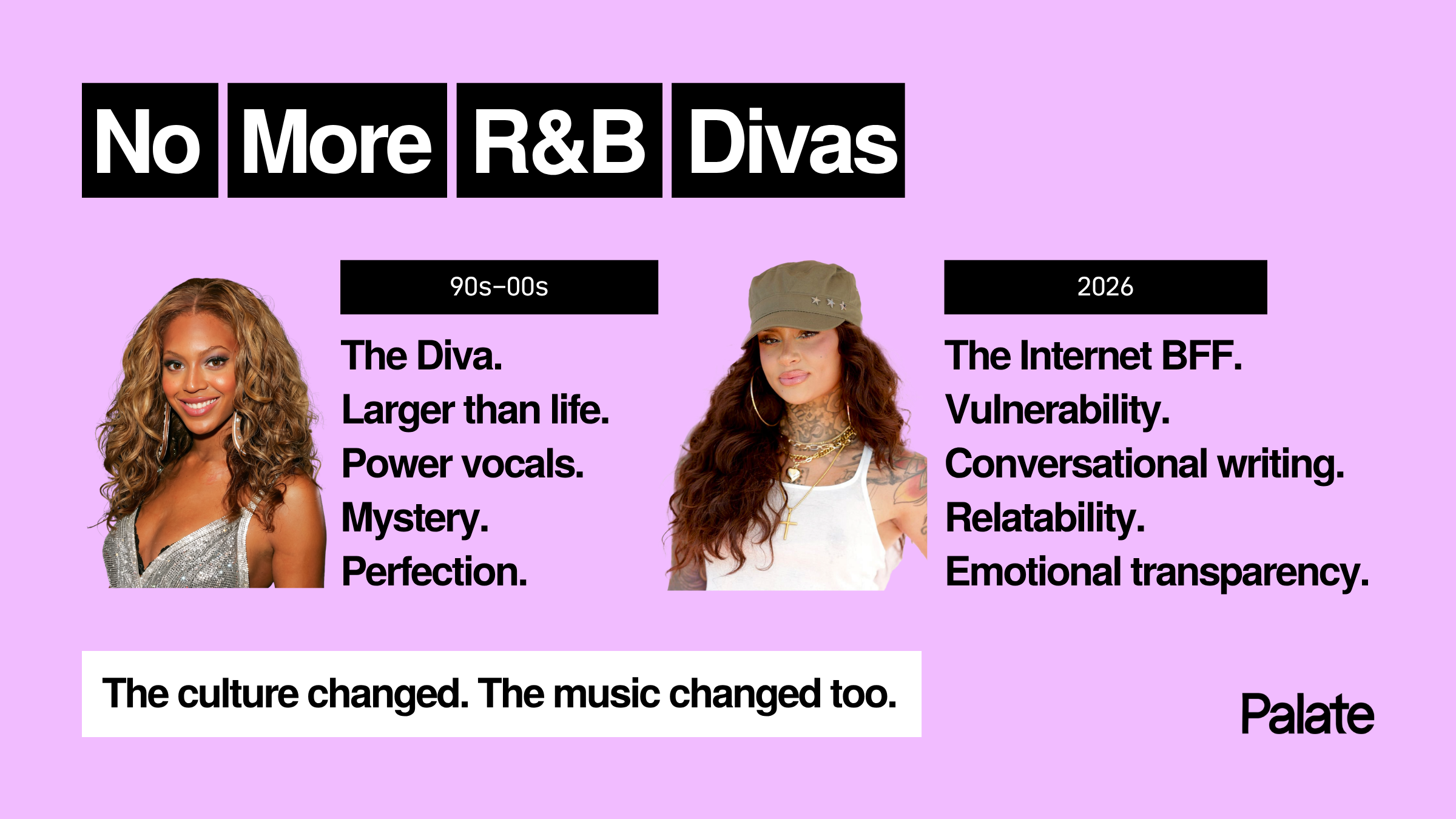
In the 1990s and 2000s, the R&B diva represented a particular model of stardom built around larger-than-life presence, powerful vocals, glamour, mystery, and perfection. Social media changed that distance.
In 2026, audiences are often drawn toward vulnerability, conversational writing, relatability, and emotional transparency. Artists can speak directly to fans every day, turning intimacy into part of the relationship.
The shift from the diva to the “internet BFF” doesn’t mean technical ability or glamour disappeared. It means intimacy became part of the brand.
Personas Give Audiences an Entry Point
Audiences don’t only follow songs. They follow people, and the role an artist consistently occupies in the audience’s mind can become a powerful shortcut for recognition.
Chxrry can embody the Party Girl. Solange can occupy an Art Girl space. Mariah the Scientist can signal Lover Girl, while H.E.R. can operate through a more reserved Shy Girl persona. These labels are intentionally simplified; real artists are obviously more complex.
But branding often works through recognizable patterns. A clear persona gives audiences an emotional entry point into the artist’s world and helps connect music, imagery, storytelling, and public identity.
Producers Are Signals Too
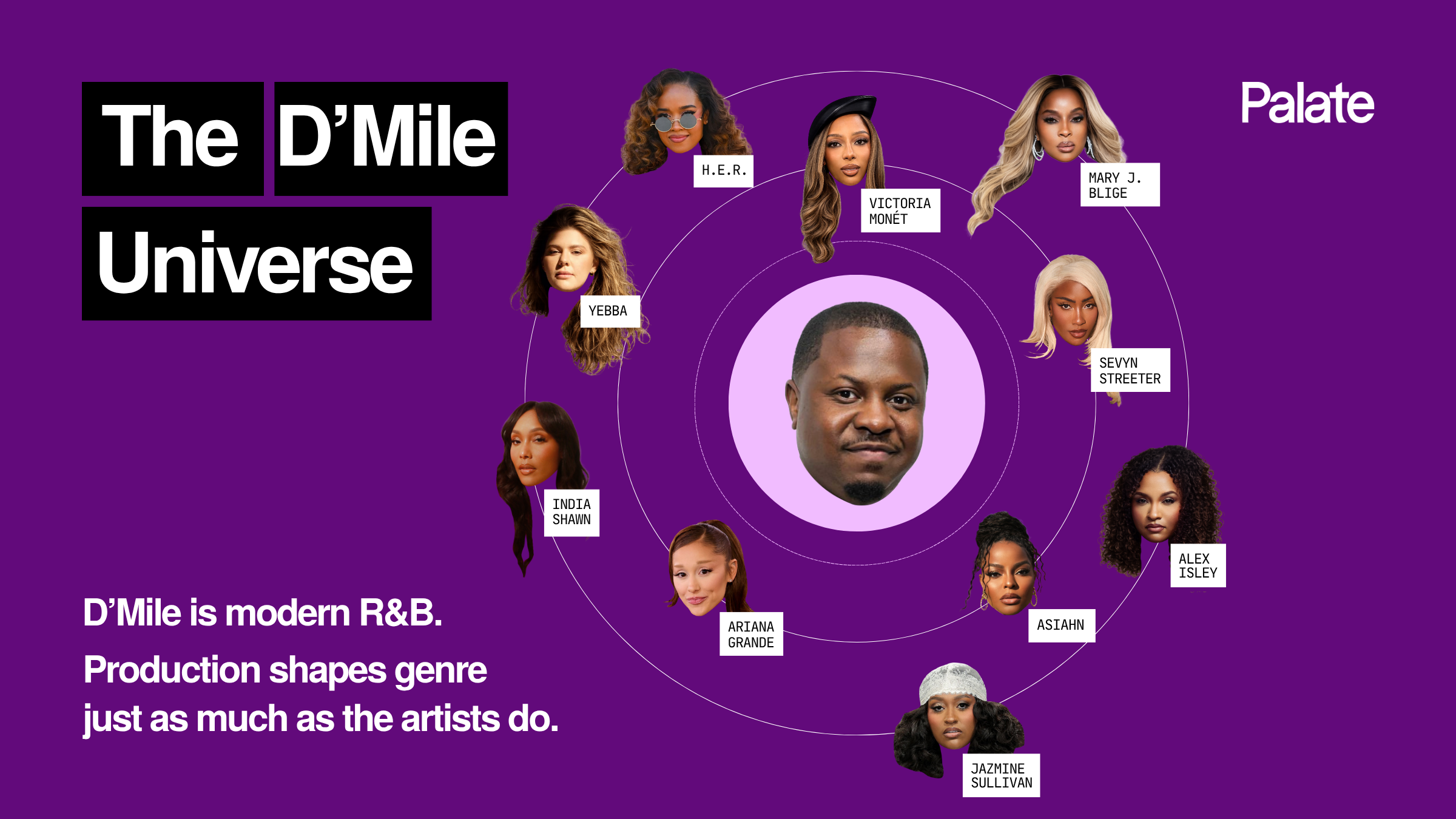
Artist positioning isn’t only visual. Production can communicate identity before the artist says a word. D’Mile signals one corner of modern R&B, Kaytranada can signal electronic movement, and Jack Antonoff carries associations with contemporary pop.
That makes production choices strategic as well as creative. A producer can help position an artist inside a genre, connect them to a particular musical lineage, or move them toward a different audience.
D’Mile provides a useful example. His orbit includes artists such as H.E.R., Victoria Monét, Jazmine Sullivan, Ariana Grande, Sevyn Streeter, India Shawn, YEBBA, Alex Isley, and Mary J. Blige.
The takeaway is bigger than one producer. Genres are also shaped by the producers, writers, musicians, and creative ecosystems repeatedly building the musical language behind the artists. When enough influential artists move through the same production ecosystem, that ecosystem becomes a genre signal.
R&B’s Four Lanes in 2026
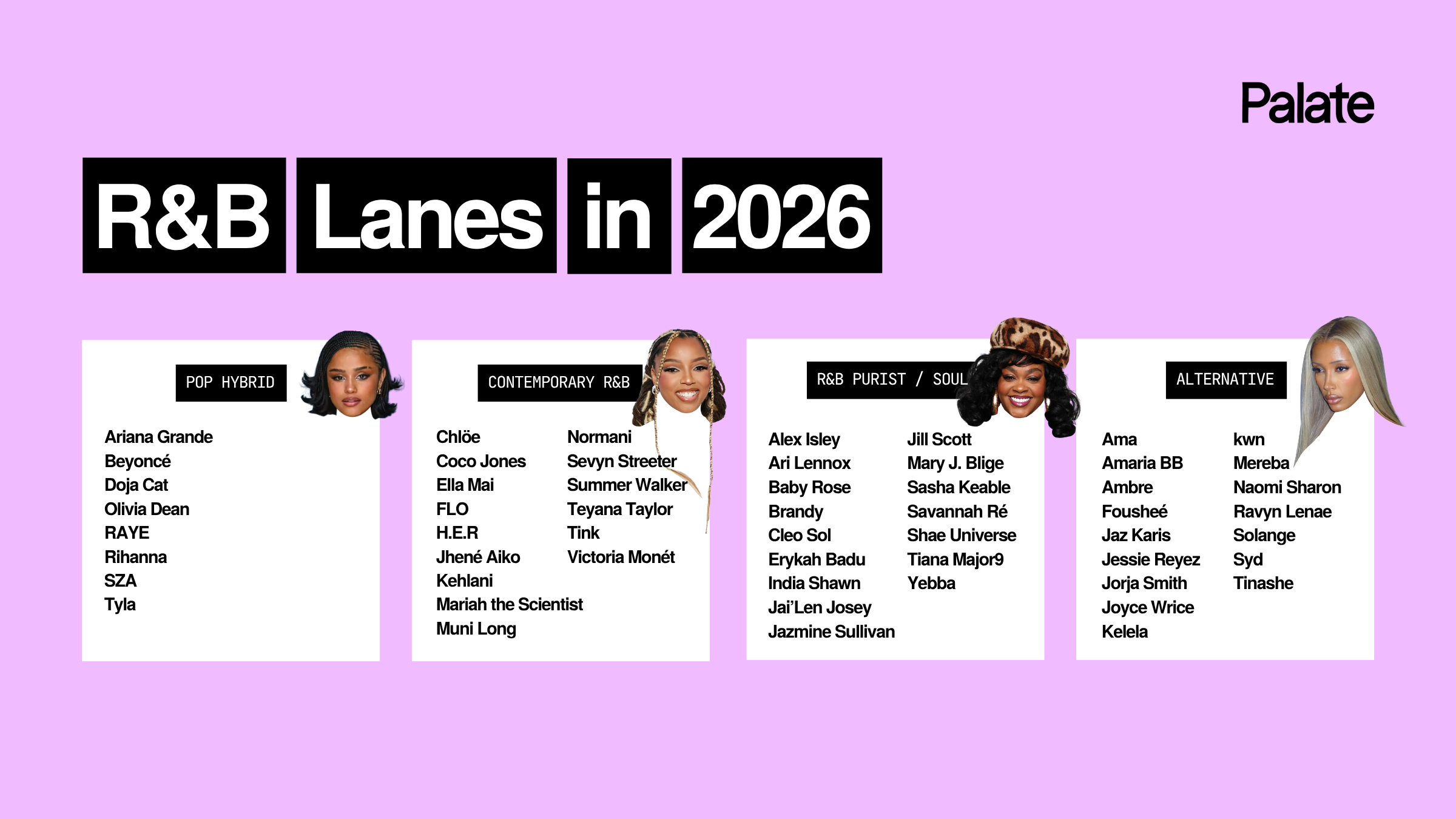
Women’s R&B in 2026 is not one sound. A useful way to understand the contemporary landscape is through four broad lanes: Pop Hybrid, Contemporary R&B, R&B Soul, and Alternative.
Pop Hybrid includes artists operating at the intersection of R&B and broad mainstream pop. Contemporary R&B represents artists working within recognizable modern R&B conventions while continuing to evolve them. R&B Soul remains more closely rooted in vocal tradition, soul lineage, and musicianship, while Alternative stretches the genre through electronic, indie, experimental, and genre-blending approaches.
Across those lanes sits a broad group of artists, from Beyoncé, Doja Cat, Olivia Dean, RAYE, Rihanna, SZA, and Tyla to Kehlani, Mariah the Scientist, Victoria Monét, Ari Lennox, Cleo Sol, Kelela, Ravyn Lenae, and Tinashe.
These categories aren’t walls. They are starting points for understanding a landscape that is increasingly fluid.
Does Pop Have a Sound?
If R&B can contain so many different sounds, another question becomes unavoidable: What exactly makes something pop?
Is it a drum pattern, vocal style, or chord progression? Or does pop sometimes function less like a specific sonic genre and more like a destination music reaches once it becomes culturally dominant?
Whitney Houston and Mariah Carey complicate that distinction. Both built enormous careers from music deeply connected to R&B while also becoming global pop stars whose catalogs crossed genre boundaries.
If pop is defined partly by reach rather than sound alone, crossover becomes more than a musical question. It becomes a question of who gets repositioned when the audience gets bigger.
Crossover Has Always Been Part of the Blueprint
For decades, collaborations, crossover singles, and movie soundtracks have helped R&B artists reach audiences outside their core genre without abandoning the foundation they already built.
Mýa’s career provides one example. Collaborations, soundtrack appearances, and solo breakthroughs helped widen the audience around her music while allowing her to move through different commercial spaces.
Crossover once functioned as a bridge. The more interesting question today is whether that bridge works equally for every artist.
The Tinashe Problem
Imagine the same record released by two different artists. If a K-pop group releases it, is it pop? If Tinashe releases it, is it R&B?
That is the Tinashe Problem, and it exposes one of the central tensions in modern genre classification.
If identical production, songwriting, or performance choices would be categorized differently depending on who releases the record, genre is no longer functioning only as a description of sound. It is also functioning as perception.
The problem isn’t being categorized as R&B. It emerges when the classification remains fixed even as the music moves somewhere else.
The Invisible Rule
This leads to a more uncomfortable question: Is everyone allowed to transcend genre in the same way?
A white artist can make music rooted in R&B and still move freely through other genre identities. A Black artist making similarly fluid music may instead remain permanently categorized as an R&B artist. In one case, genre describes the record. In the other, it can begin to describe the person.
R&B itself isn’t the problem. It is a foundational, influential, and expansive genre with enormous cultural value. The issue is whether the label is being applied consistently or whether it sometimes narrows how certain artists are allowed to be understood.
When genre follows the person more strongly than the music, classification can begin functioning like a ceiling.
The Rihanna Question
Rihanna illustrates what can happen when an artist becomes culturally larger than any individual category. Pop, R&B, dance, reggae, hip-hop, and electronic music can all describe pieces of her catalog, but none adequately defines the entire artist.
At that level, the artist becomes the organizing principle. Audiences no longer need every record to fit neatly into the same genre because the identity connecting the records is Rihanna herself.
That creates the Rihanna Question: When does an artist outgrow genre?
And perhaps more importantly: Who is allowed to?
Genre Shapes Careers
These questions matter because genre does far more than describe sound. It can influence audience, radio, playlists, press, festivals, awards, touring, and budget.
The category attached to an artist can determine where a record is marketed, which radio formats consider it, which playlist editors hear it, which publications cover it, which festival stages become available, and how much investment a project receives.
That is why artists sometimes resist labels that outsiders may consider harmless. The concern isn’t necessarily about rejecting R&B. It is about understanding everything that can happen after the category is assigned.
Genre isn’t simply metadata. It can shape the ceiling of a career.
Common Mistakes When Positioning Women in R&B
One mistake is treating R&B as a single sonic category when the contemporary landscape clearly operates across multiple lanes. Another is assuming crossover weakens an artist’s R&B identity when historically it has often expanded R&B careers rather than erased their foundations.
Artists and teams can also underestimate the role of persona and production. Music, producers, imagery, public identity, and storytelling work together to determine how an audience understands an artist.
Finally, genre labels shouldn’t be treated as neutral when they affect radio, playlists, press, touring opportunities, awards, and budgets. The question shouldn’t only be What category fits this record? It should also be What does this category do to the artist’s career?
The R&B Artist Positioning Checklist
Identify the artist’s musical foundation without forcing every release into one lane.
Separate the sound of an individual record from the broader identity of the artist.
Define a clear persona audiences can recognize across releases.
Treat producer choices as part of artist positioning.
Map where the artist naturally sits across pop hybrid, contemporary R&B, soul and alternative spaces.
Consider crossover opportunities without assuming broader reach requires abandoning R&B.
Audit how genre classification affects radio, playlists, press and festivals.
Make sure the artist’s visual and narrative identity supports the musical positioning.
Ask whether genre is describing the music or restricting the artist.
Build toward a career identity that can expand as the artist evolves.
Key Takeaways
Women have always expanded the boundaries of R&B, and the 2026 landscape continues that tradition. Artists now move across pop, contemporary R&B, soul, and alternative spaces, while producers can function as genre signals and personas help audiences understand artists before they hear every song.
At the same time, genre still carries enormous business consequences. It can influence who hears the music, how it’s marketed, where it’s played, which opportunities become available, and how much investment sits behind an artist’s career.
The central question isn’t whether R&B should have boundaries. It’s whether those boundaries are being applied to music or to people.
Frequently Asked Questions
What defines R&B in 2026?
R&B continues to draw from vocal performance, Black musical lineage, gospel influence, groove, romance and musicianship, while expanding through pop, electronic, alternative and other influences.
Who are the leading women in R&B in 2026?
The contemporary landscape includes artists across multiple lanes, from SZA, Beyoncé, Rihanna, RAYE and Tyla to Kehlani, Mariah the Scientist, Victoria Monét, Ari Lennox, Cleo Sol, Kelela, Ravyn Lenae, Tinashe and many others.
Why do R&B artists push back on genre labels?
Genre can affect far more than musical description. It can influence radio, playlists, press, festivals, awards, touring and budgets, meaning the label attached to an artist can materially shape career opportunities.
What is the difference between R&B and pop?
There is no single sonic test that cleanly separates the two. Pop can function partly as a category of broad cultural reach, which is why highly successful R&B-rooted artists may eventually be positioned across both.
Why is Tinashe often used in conversations about genre?
The “Tinashe Problem” asks whether the same record would be categorized differently if released by a different artist. It highlights how genre perception can attach to the identity of the performer rather than only to the sound of the song.
Can artists outgrow genre?
At a certain level of cultural scale, some artists operate across so many sounds and audiences that no single genre adequately defines them. Rihanna is used in the source as the clearest example of an artist becoming bigger than the category.
R&B Should Be Allowed to Expand
Women’s R&B doesn’t need a narrower definition. Its history suggests the opposite. Every generation has expanded the category through new sounds, identities, production styles, and models of crossover.
The challenge is making sure genre remains a useful way of understanding music rather than becoming a ceiling placed on the artist.
R&B can be expansive. The careers built from it should be allowed to be expansive too.
