
The State of R&B: What’s Next for Male R&B?
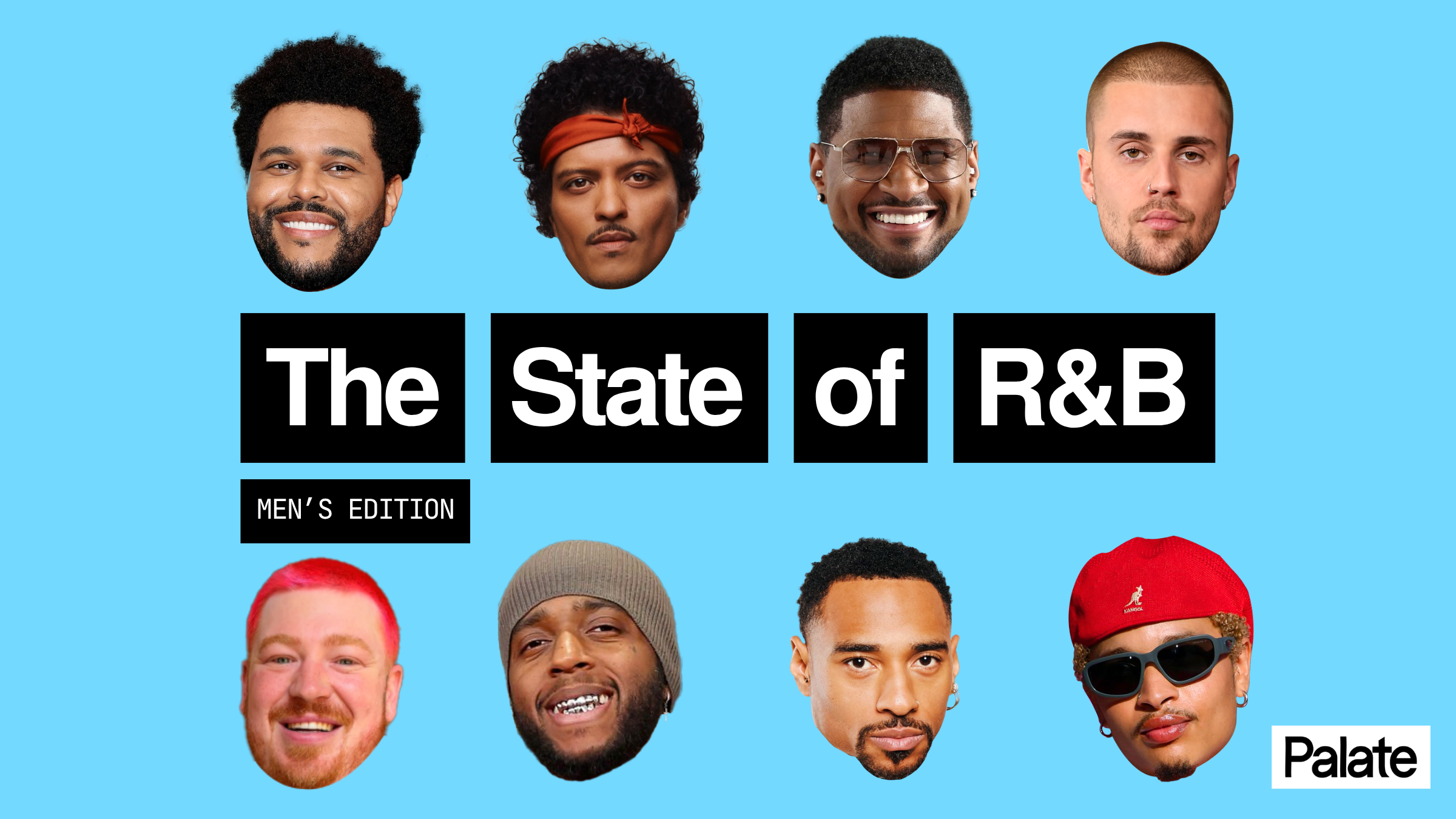
For decades, male R&B had a recognizable path to superstardom. Great singers became great performers, groups developed future solo stars, and radio and major-label campaigns could turn records into cultural moments. Artists like Michael Jackson, Usher, and The Weeknd could begin inside R&B and eventually reach audiences far beyond it.
Male R&B in 2026 is harder to define. The genre now stretches from traditional soul and vocal-driven R&B to hip-hop-adjacent records, alternative experimentation, and global pop. At the same time, much of the infrastructure that once helped develop male R&B stars, from groups to long-term artist development, has changed dramatically.
R&B still has talent. The bigger question is whether today’s music business is structured to turn that talent into the next generation of superstars.
Quick Answer: What Is the State of Male R&B in 2026?
Male R&B in 2026 is more stylistically diverse than ever, but it has fewer universally recognized new superstars. Artists now operate across pop hybrid, hip-hop adjacent, traditional R&B and soul, and alternative spaces, often moving between those lanes rather than staying inside one category.
Streaming has also changed how artists are discovered and developed. Boy bands no longer provide the same pipeline for learning performance, branding, and fandom, while major crossover success can quickly move an R&B artist into the broader pop conversation.
The next male R&B superstar may therefore need more than a great voice. He needs performance, narrative, identity, and the infrastructure to turn all of it into scale.
Explore The State of R&B: Men’s Edition Visual Report
The Blueprint of Male R&B
Every generation of male R&B builds on the one before it. The 1970s established foundations through Marvin Gaye, Stevie Wonder, Donny Hathaway, The Isley Brothers, Earth, Wind & Fire, and others. The 1980s produced architects of modern superstardom through Michael Jackson, Prince, New Edition, Bobby Brown, and Luther Vandross.
By the 1990s, R&B had become a major hitmaking engine. Babyface, Boyz II Men, Jodeci, and a larger ecosystem of male vocalists and groups helped define an era where R&B could dominate mainstream music. The 2000s continued that lineage through artists including Usher, D’Angelo, Maxwell, Joe, Musiq Soulchild, and Tank.
Then streaming changed the architecture. Chris Brown, Frank Ocean, The Weeknd, PARTYNEXTDOOR, Brent Faiyaz, and Drake represent dramatically different versions of what R&B influence can look like in the streaming era.
The lineage remains. The definition keeps expanding.
What Is R&B Now?
That expansion raises a deceptively difficult question: What actually counts as R&B now?
Durand Bernarr has pushed against being confined by the category. Although he loves R&B and is fluent in its language, he considers himself an artist rather than simply an “R&B artist,” particularly because the next thing he creates could move somewhere entirely different.
His point reflects a tension that extends far beyond one artist. Genre can help audiences understand music, but it can also become a box. For artists drawing simultaneously from soul, funk, rock, hip-hop, electronic music, and pop, traditional boundaries may no longer describe everything they are making.
Every genre evolves. There is no reason R&B should be different.
Does Streaming Reward Great Singers?
Expanding R&B gives artists more freedom to experiment, but it also raises another question. R&B spent decades rewarding great singers. Does streaming reward the same thing?
Streaming prioritizes repeat listening, playlist compatibility, audience behavior, and records that can travel quickly through digital ecosystems. Vocal ability can still be enormously valuable, but technical singing is no longer the only route to cultural relevance.
That changes what an emerging R&B artist may need to compete. A voice can create the foundation, but the larger career increasingly depends on everything built around it.
The Masculinity Shift: Usher vs. Brent Faiyaz
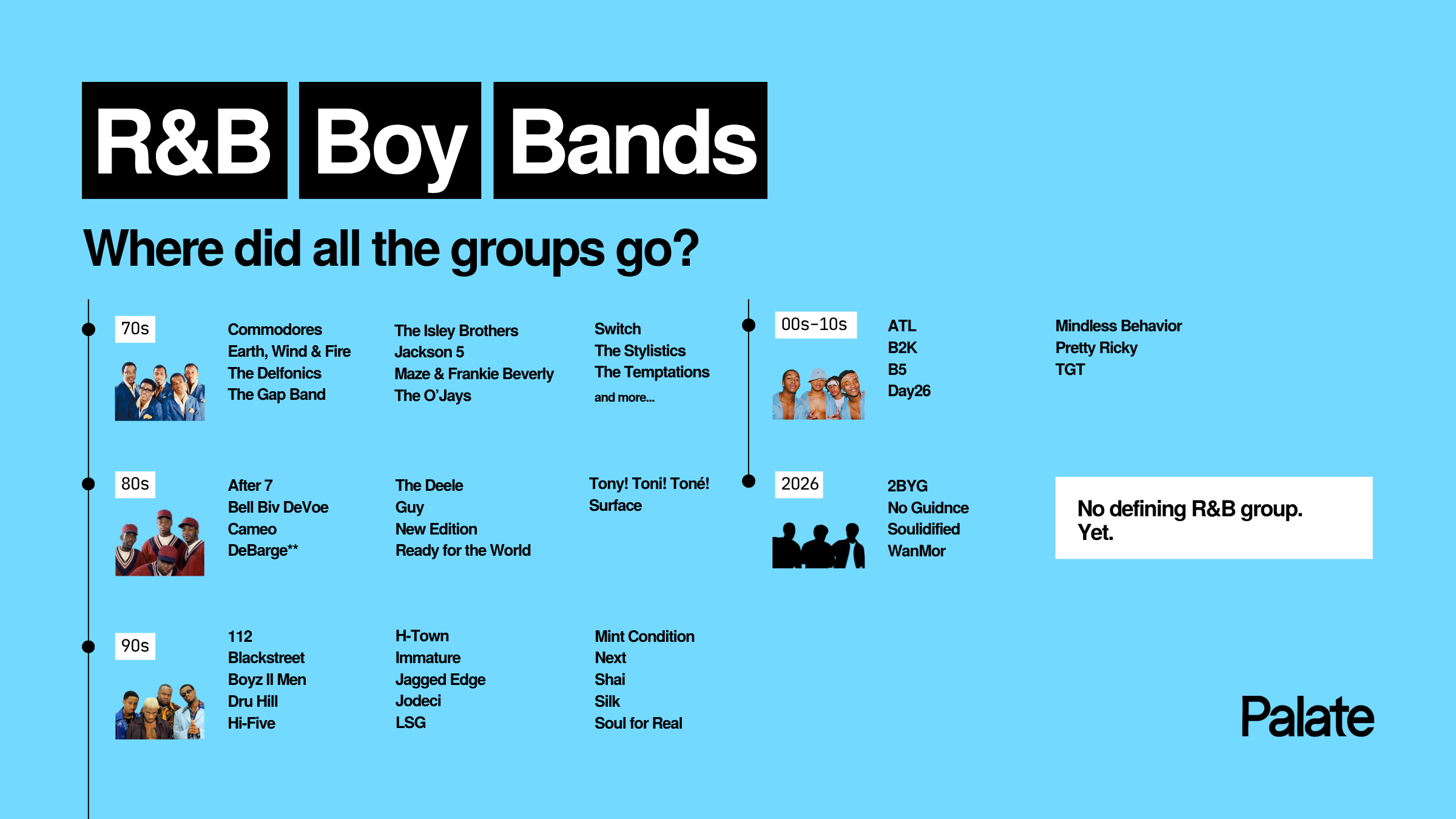
The sound changed, but so did the image of the male R&B star. Usher and Brent Faiyaz illustrate two very different eras of R&B masculinity.
The traditional heartthrob was polished, charismatic, openly seductive, and built around performance. The contemporary “internet antihero” can operate differently: detached, mysterious, and nonchalant.
This isn’t simply a comparison between two artists, nor is one model inherently better than the other. It reflects changing ideas about desirability, masculinity, and authenticity, and how male R&B stars have changed alongside their audiences.
R&B’s Four Lanes in 2026
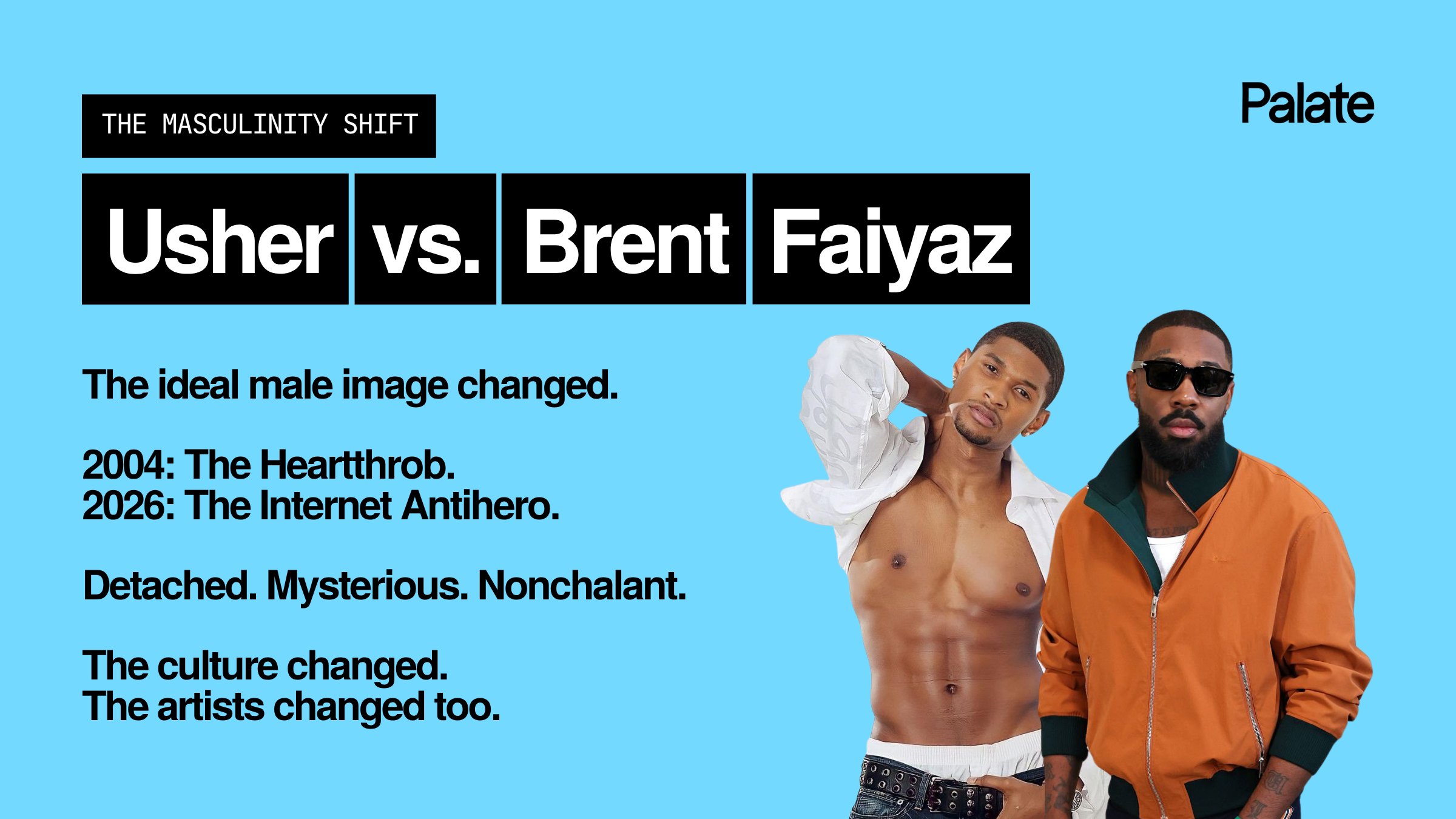
Trying to discuss contemporary male R&B as one sound misses what the genre has become. A more useful framework divides the landscape into four broad lanes: Pop Hybrid, Hip-Hop Adjacent, R&B Purist / Soul, and Alternative.
Pop Hybrid artists operate within crossover and global audiences. Hip-Hop Adjacent artists combine hip-hop influence with melody at the center. R&B Purist / Soul foregrounds tradition, vocals, and musicianship, while Alternative pushes R&B beyond conventional genre rules.
Bruno Mars, Usher, and The Weeknd can occupy a crossover conversation. Brent Faiyaz, Bryson Tiller, and PARTYNEXTDOOR illustrate R&B’s relationship with hip-hop. Leon Thomas, Lucky Daye, and Durand Bernarr foreground musicianship and R&B lineage, while artists such as 6LACK, Odeal, Jordan Ward, and Steve Lacy stretch its boundaries.
These aren’t rigid classifications. Artists can move between them, and that flexibility is part of the point.
Male R&B isn’t one lane anymore. It is an ecosystem.
Where Did All the R&B Groups Go?
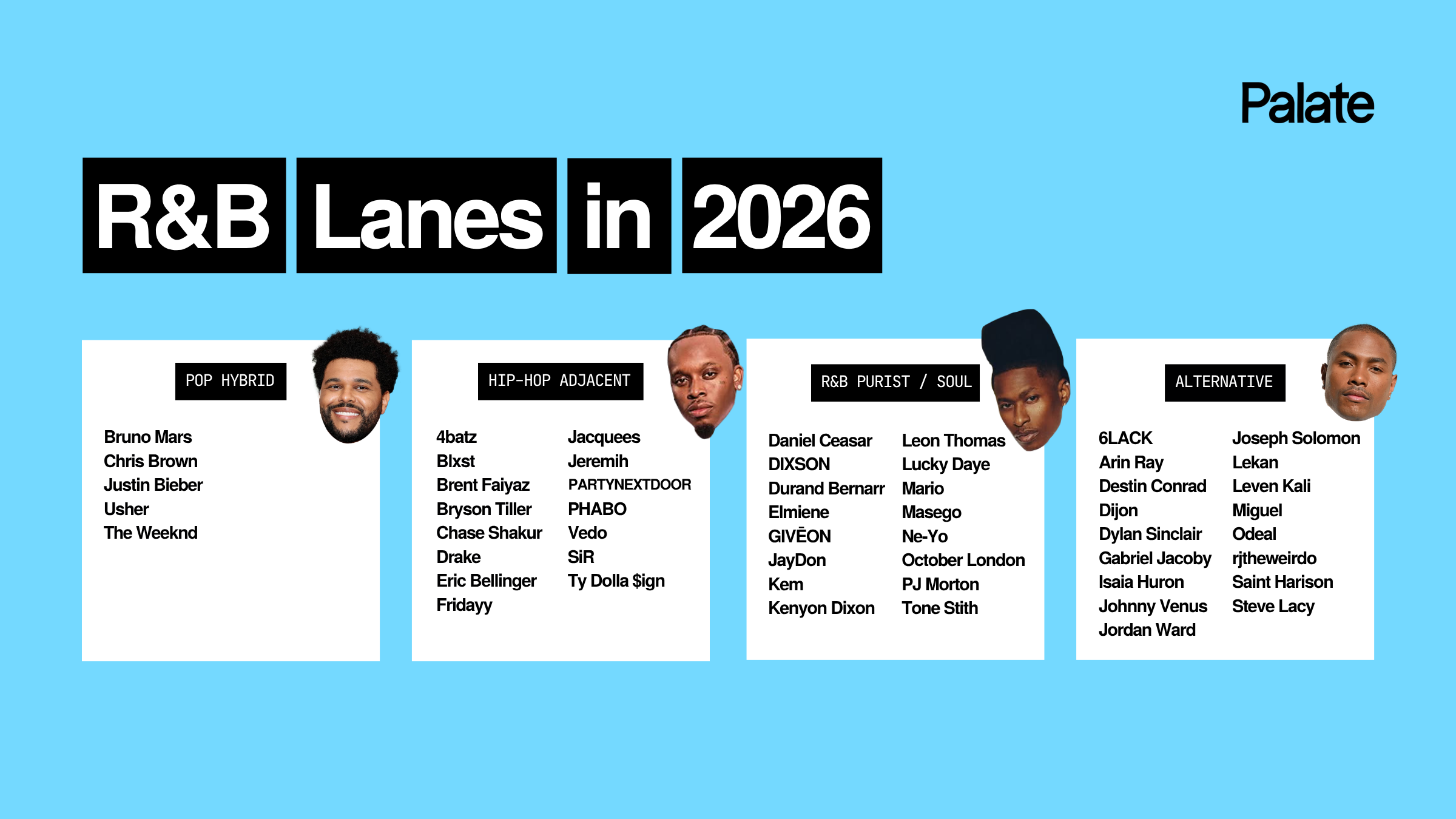
One of the most dramatic changes in male R&B becomes obvious when you look at groups. Earlier generations had enormous ecosystems of male bands and vocal groups, from The Isley Brothers, The O’Jays, The Temptations, and Earth, Wind & Fire to New Edition, Guy, DeBarge, and Tony! Toni! Toné!
The 1990s brought another extraordinary wave through 112, Blackstreet, Boyz II Men, Dru Hill, H-Town, Jagged Edge, Jodeci, Next, Silk, and others. By the 2000s and 2010s, that ecosystem had contracted significantly.
Groups including 2BYG, No Guidnce, Soulidified, and WanMor are carrying the format forward in 2026, but there is not yet one defining contemporary R&B group occupying the cultural position groups held in previous generations.
The important question isn’t only where the groups went. It’s what disappeared with them.
The Boy Band Pipeline Was Artist Development
For decades, groups functioned as training grounds. Artists learned harmonies, choreography, stage presence, branding, and fandom while individual members developed personas that gave audiences multiple entry points into the group. From an A&R perspective, that ecosystem could also create a pipeline for future solo stars.
Today’s solo artists often have to build all of that themselves. An emerging singer may be expected to develop his voice, visual identity, performance skills, fanbase, social presence, and narrative simultaneously, often while releasing music publicly and being judged in real time.
The disappearance of the group pipeline didn’t eliminate the need for artist development. It transferred more of the responsibility directly onto the artist.
The R&B Starter Pack
Even as R&B expands musically, the genre still has an instantly recognizable cultural vocabulary: late-night texts, toxic romance, therapy language, yearning, the apology, the serenade, and, naturally, shirtless in the rain.
These recurring motifs work because audiences understand them immediately. They connect contemporary R&B to decades of romance, vulnerability, seduction, and emotional drama.
But a starter pack is exactly that: a starting point. The next generation still has to figure out how to take familiar R&B language and make it feel specific to them.
What Does the Next R&B Superstar Look Like?
The next male R&B superstar may need to solve three problems at once: Can he hold the room? Can he hold a note? Can he hold a narrative?
In other words: performance, singing, and story.
That framework captures something streaming numbers alone can’t measure. Records create the foundation, but performance creates connection, vocals create musical authority, and narrative gives audiences a reason to remain invested beyond an individual song.
The next major R&B star may be the artist who can combine all three without feeling manufactured.
Stars Are Funded
Talent matters, but talent alone has never been the entire equation. Producer Troy Taylor has argued that artists throughout music history became stars because somebody intentionally invested in them.
Finding talented singers is not the same thing as developing stars. Development takes time. Performance takes practice. Marketing takes repetition. Visual identity takes investment. Touring requires infrastructure.
This becomes particularly important when asking why there aren’t more new R&B superstars. If the industry wants another generation of household-name artists, identifying talent is only the beginning. Somebody still has to invest in building it.
When Does R&B Become Pop?
There is a strange paradox at the top of R&B. What happens when an R&B artist becomes successful enough to transcend the category?
The Weeknd and Bruno Mars illustrate how artists with strong relationships to R&B can enter a much broader pop conversation once their audiences reach global scale. The progression can begin to look like R&B Artist → Crossover Success → Pop Star.
That creates a measurement problem. If R&B’s biggest crossover successes eventually become categorized as pop, looking only inside the R&B category can make the genre appear to have fewer superstars precisely because some of its largest successes have expanded beyond it.
So perhaps the question isn’t simply: Where is the next Usher?
It is: Can today’s music business still develop an R&B artist into that level of superstar?
What Does Success Look Like Now?
There is also more than one way to measure a successful R&B career. Would you rather have one Top 10 record or 5,000 fans showing up at every tour stop?
A chart hit demonstrates enormous reach. Consistent touring demand demonstrates something different: an audience willing to repeatedly invest time and money in an artist.
The strongest careers can have both, but a fragmented music business creates more room for the second outcome to sustain a career even when the first never happens. That expands the definition of what successful male R&B can look like.
Common Mistakes in Developing Male R&B Artists
One mistake is assuming a great voice automatically creates a star. Vocal ability matters, but performance, narrative, branding, repertoire, and audience development matter too.
Another is forcing every artist into the same definition of R&B. The contemporary genre contains multiple lanes, and artists should have room to move between them.
There is also a tendency to chase streaming performance before developing the fundamentals that artists once learned inside groups: stage presence, identity, fandom, and live performance. Finally, crossover should not automatically be treated as abandoning R&B. Reaching broader audiences has historically been part of how the genre creates global stars.
The R&B Artist Development Checklist
Define which R&B lane the artist naturally occupies—and where they can credibly cross over.
Develop live performance alongside recorded music.
Build a recognizable visual identity rather than relying exclusively on aesthetics common to the genre.
Identify the artist’s narrative beyond individual songs.
Develop vocal strengths without assuming technical ability alone will create audience connection.
Study how masculinity and desirability are changing for the artist’s generation.
Build fandom, not simply streaming activity.
Test whether audiences will buy tickets and show up repeatedly.
Give artist development enough time to actually develop the artist.
Build the marketing and financial infrastructure required to scale when demand appears.
Key Takeaways
Male R&B isn’t short on talent. It is navigating a different system. The genre has expanded into pop hybrid, hip-hop adjacent, traditional soul, and alternative lanes. Masculinity and artist image have shifted, the group ecosystem that once developed performers has dramatically contracted, and streaming has changed how artists are discovered.
At the same time, the fundamentals of building stars haven’t completely changed. Talent still needs development. Artists need stories. Performers need stages. And when genuine audience demand appears, somebody still has to invest enough resources to turn momentum into scale.
The next R&B superstar may already exist. The question is whether the infrastructure around him is prepared to build one.
Frequently Asked Questions
Is R&B still popular in 2026?
R&B continues to influence mainstream music while encompassing an increasingly wide range of sounds. Part of the challenge in measuring its cultural position is that artists with significant crossover success may also be categorized as pop, hip-hop or alternative rather than exclusively as R&B.
Who are the male R&B artists to watch in 2026?
The contemporary male R&B landscape extends well beyond a single sound. The source maps artists including Leon Thomas, Brent Faiyaz, Lucky Daye, Durand Bernarr, Odeal, Destin Conrad, Elmiene, Saint Harison, Jordan Ward and others across several different R&B lanes.
Why aren’t there more R&B boy bands?
The number of prominent male R&B groups has declined significantly compared with previous decades. That matters because groups historically served as development environments for harmonies, choreography, performance, branding and fandom, not simply as a release format.
What makes an R&B superstar?
The framework identifies three components: the ability to hold a room, hold a note and hold a narrative. In other words: performance, singing and story.
Why do successful R&B artists become labeled pop?
As artists reach broad crossover audiences, their music and public positioning can expand beyond genre-specific marketing. That can move artists into the larger pop conversation even when R&B remains central to their musical foundation.
Building the Next Era of Male R&B
Male R&B doesn’t need to recreate an earlier era. It needs the infrastructure to develop the one happening now.
The genre has more lanes, more freedom, and more ways for artists to build audiences than previous generations had. But greater access doesn’t automatically produce greater stars.
The next era will depend on artists who can combine performance, vocals, identity, and narrative with audiences ready to invest in them. And when those artists emerge, the business still has a role to play: giving talent enough time, resources, and development to become something bigger.
