
The Future of Rap: Why Hip-Hop’s Next Era May Be Bigger Than Superstardom
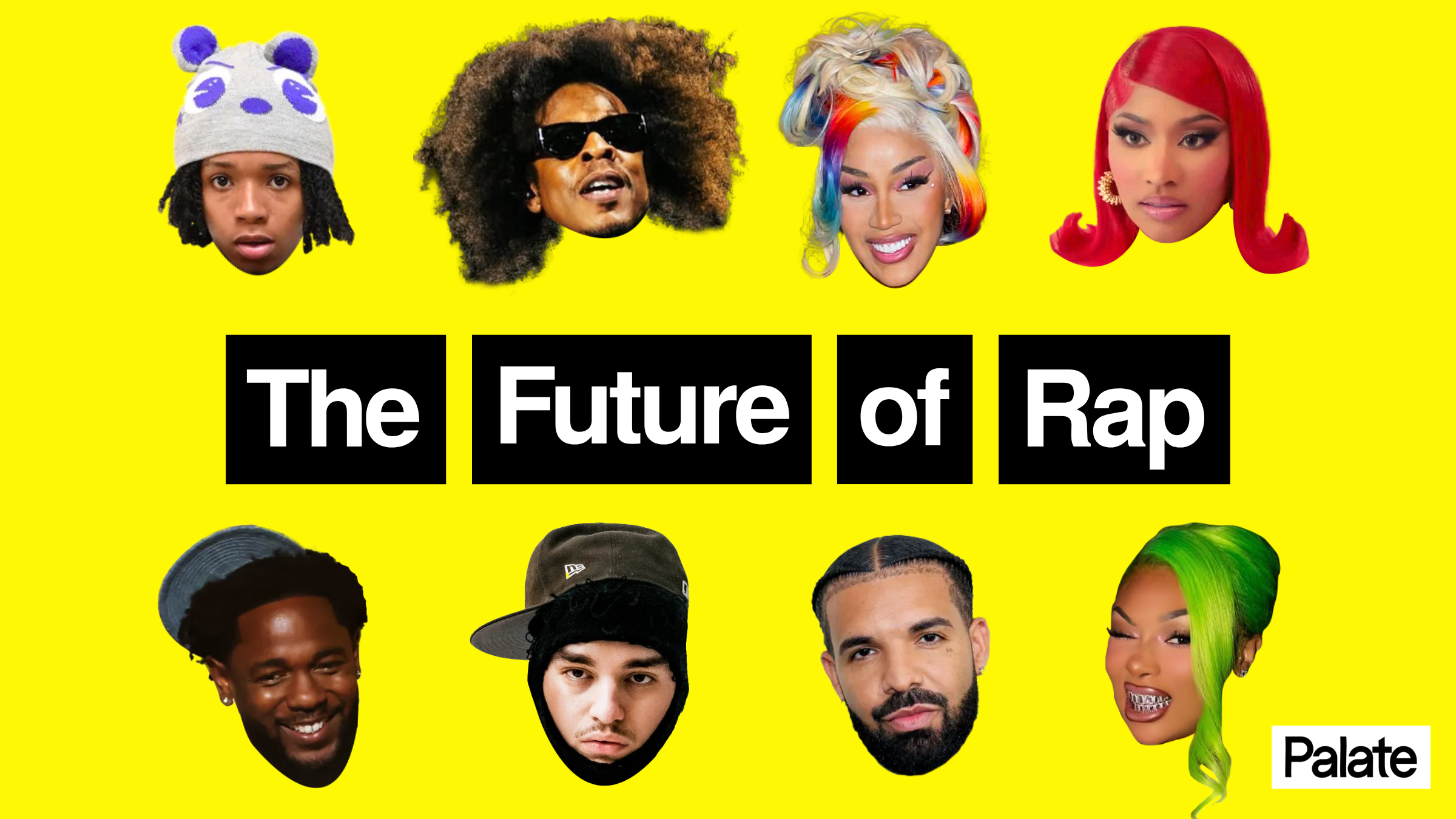
For decades, the music business had a relatively clear definition of what it meant to “make it” in rap: become a superstar.
Radio made records unavoidable. MTV turned artists into visual icons. Major labels built national campaigns, while charts provided a shared scoreboard. Artists like Jay-Z, Lil Wayne, Kanye West, Nicki Minaj, and Drake became recognizable far beyond hip-hop because millions of listeners were participating in roughly the same cultural conversation.
Rap in 2026 looks radically different. The genre has developed an enormous network of subgenres, scenes, platforms, and communities, allowing an artist to become culturally significant within one corner of the internet while remaining virtually invisible in another.
The question facing rap is therefore bigger than Who is the next superstar?
It may be: Does rap still need the same kind of superstar at all?
Quick Answer: What Is the Future of Rap?
The future of rap is increasingly community-driven rather than exclusively mass-market-driven. Instead of every successful rapper needing radio dominance, crossover hits, and universal recognition, artists can build meaningful careers around smaller but highly engaged audiences.
The old model optimized for reach. The emerging model places greater value on depth: the right fans streaming, buying tickets, purchasing merchandise, sharing music, and participating in an artist’s world.
That doesn’t mean global rap superstars will disappear. It means superstardom is becoming one possible outcome instead of the only definition of success.
Explore The Future of Rap Visual Report
The Rap Eras: How Music Discovery Keeps Changing
Every generation of rap has had a dominant discovery system. Hip-hop emerged from parties before radio, MTV, and labels helped scale the genre nationally. The 1990s amplified regional scenes through powerful label ecosystems, while the 2000s combined radio with mixtape culture. By the 2010s, social media and streaming had fundamentally changed how new artists reached audiences.
The 2020s introduced another shift: algorithms and communities increasingly determine discovery. TikTok, YouTube, Spotify, SoundCloud, Instagram, and other platforms can each surface entirely different artists to entirely different audiences.
That creates more pathways into the music business, but it also creates less consensus around who matters most.
Adaptation Is the Business Model
Every technological transition in music changes who controls discovery, how fans behave, and where money flows. Veteran artists have lived through vinyl, cassettes, CDs, downloads, streaming, and social media, with each transition requiring another adjustment to how music is released and careers are maintained.
Today, getting distributed is no longer the primary obstacle. An artist can make music available globally almost instantly. The harder challenge is converting that visibility into something durable.
More people being able to see you does not necessarily mean more people care about you. And more people caring does not automatically mean the artist has built a sustainable business around that attention.
For contemporary rappers, adaptation isn’t something that happens once. It has become part of the business model.
The Rap Superstar Model Is Changing
For roughly two decades, rap’s highest aspiration was mass recognition. Jay-Z, Lil Wayne, Kanye West, Nicki Minaj, and Drake built careers during periods when radio, award shows, charts, magazines, blogs, and mainstream media could concentrate enormous amounts of attention around relatively few artists.
The result was more than commercial success. These artists became part of a shared culture, recognizable even to people who weren’t deeply invested in hip-hop.
But when audiences no longer consume the same media or encounter the same artists, creating that degree of consensus becomes harder.
Success doesn’t disappear. Consensus does.
Drake vs. Yeat: Mass Audience vs. Cult Audience
Drake and Yeat illustrate two different models of rap stardom. Drake represents the traditional model: enormous reach, mainstream recognition, crossover success, and years of mass-market dominance. Yeat represents an internet-native alternative built around a highly identifiable world and a deeply committed audience.
The distinction can be summarized simply. The old model was everybody knows you. The newer model can be the right people are obsessed with you.
One does not necessarily replace the other. The important change is that both can now exist simultaneously, creating more than one viable path toward a significant rap career.
Rap in 2026 Is an Ecosystem, Not One Sound
Claims that “rap is dead” often measure the genre against an earlier version of itself. Look more closely and something different appears.
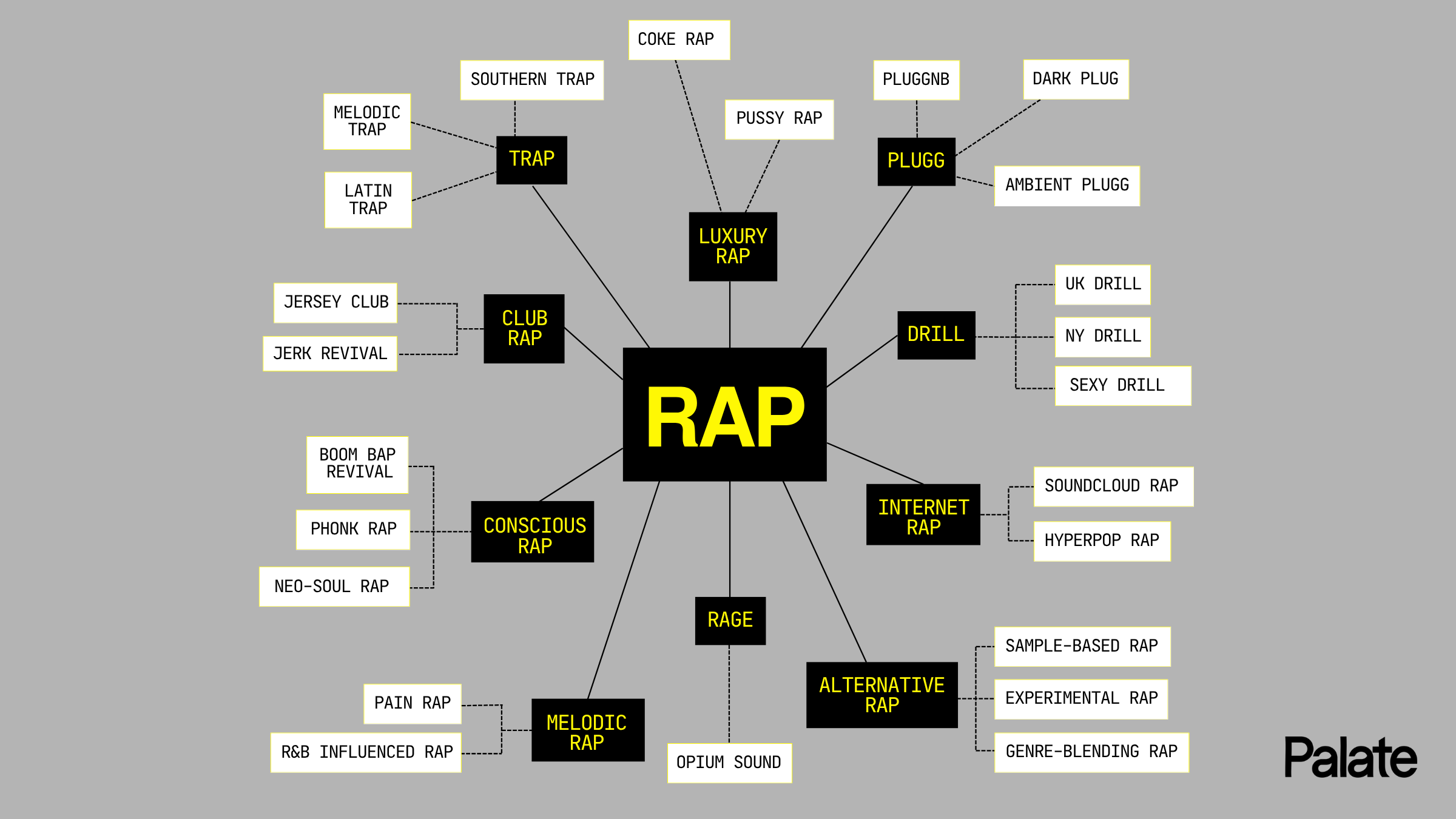
Drill, rage, plugg, internet rap, melodic rap, alternative rap, club rap, conscious rap, luxury rap, Southern trap, and numerous smaller branches now coexist. An artist no longer needs to participate in the genre’s dominant sound because the internet can sustain multiple scenes at the same time.
Fragmentation can look like decline when viewed through mass-market metrics. From another angle, it looks like diversification.
Rap doesn’t need one dominant sound when dozens of communities can build their own.
The 1,000 True Fans Shift
Rap’s increasingly fragmented landscape brings the genre surprisingly close to Kevin Kelly’s 2008 concept of “1,000 True Fans.” The idea challenged the assumption that creators need millions of casual consumers to build viable careers. Instead, direct support from a smaller number of deeply invested people can create an alternative path between obscurity and mass superstardom.
Applied to music, the progression looks something like this: followers watch, listeners consume, fans participate, and superfans invest. That investment might mean tickets, merchandise, physical music, subscriptions, limited products, or repeatedly bringing other people into the community.
The goal isn’t literally obtaining exactly 1,000 fans. Kelly himself describes the number as flexible rather than absolute. The more useful principle for artists is fan density over follower volume.
Festival Crowds vs. Owned Audiences
A viral clip from a festival can make an artist look enormous, but a 50,000-person festival audience isn’t the same thing as 50,000 fans of that artist. The festival provides a temporary audience made up largely of people who were already there.
A 500-capacity headline show represents something different. Those people intentionally chose the artist, bought tickets, and entered that artist’s world.
That makes live performance an important test of audience depth. A smaller room filled with people who specifically came to see an artist can reveal more about long-term demand than a massive borrowed crowd.
Festivals create moments. Headline shows reveal careers.
Rap’s Tour Economy Has More Than One Level
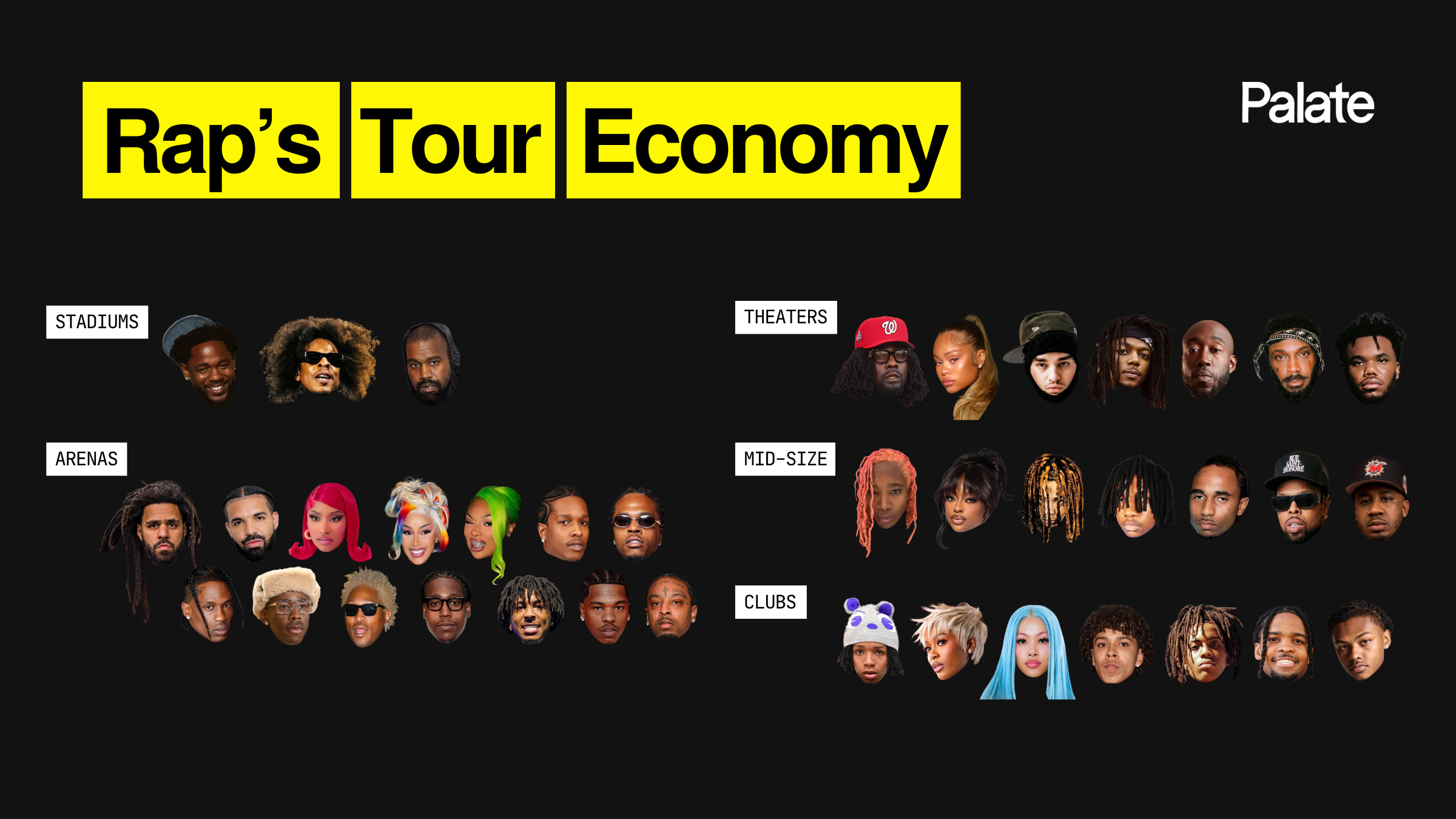
The touring business makes rap’s fragmentation visible. At the top are stadium and arena artists, but beneath them exists an increasingly deep economy of theater, mid-size, and club acts.
Artists do not need identical levels of demand for touring to become meaningful. A rapper who can consistently fill clubs or theaters may have a smaller audience than a stadium artist, but that audience is demonstrating something streaming alone cannot: a willingness to leave home, spend money, and participate.
The goal therefore doesn’t have to be graduating every artist toward a stadium. The larger opportunity is recognizing that sustainable touring economies can exist at multiple levels.
Hip-Hop Is Now Multigenerational
Hip-hop turns 53 in 2026, creating something the genre has never experienced at this scale: artists and audiences aging together.
Listeners didn’t simply age out of rap. Multiple generations now consume different versions of the genre simultaneously, creating room for legacy artists to speak to audiences who have grown alongside them while younger artists continue building new cultural languages.
That expands what a rap career can look like. Longevity doesn’t have to mean recreating youth culture, and relevance doesn’t have to disappear simply because an artist or audience gets older.
Rap is becoming a multigenerational ecosystem.
Youth Culture Is Building Its Own Rap Aesthetic
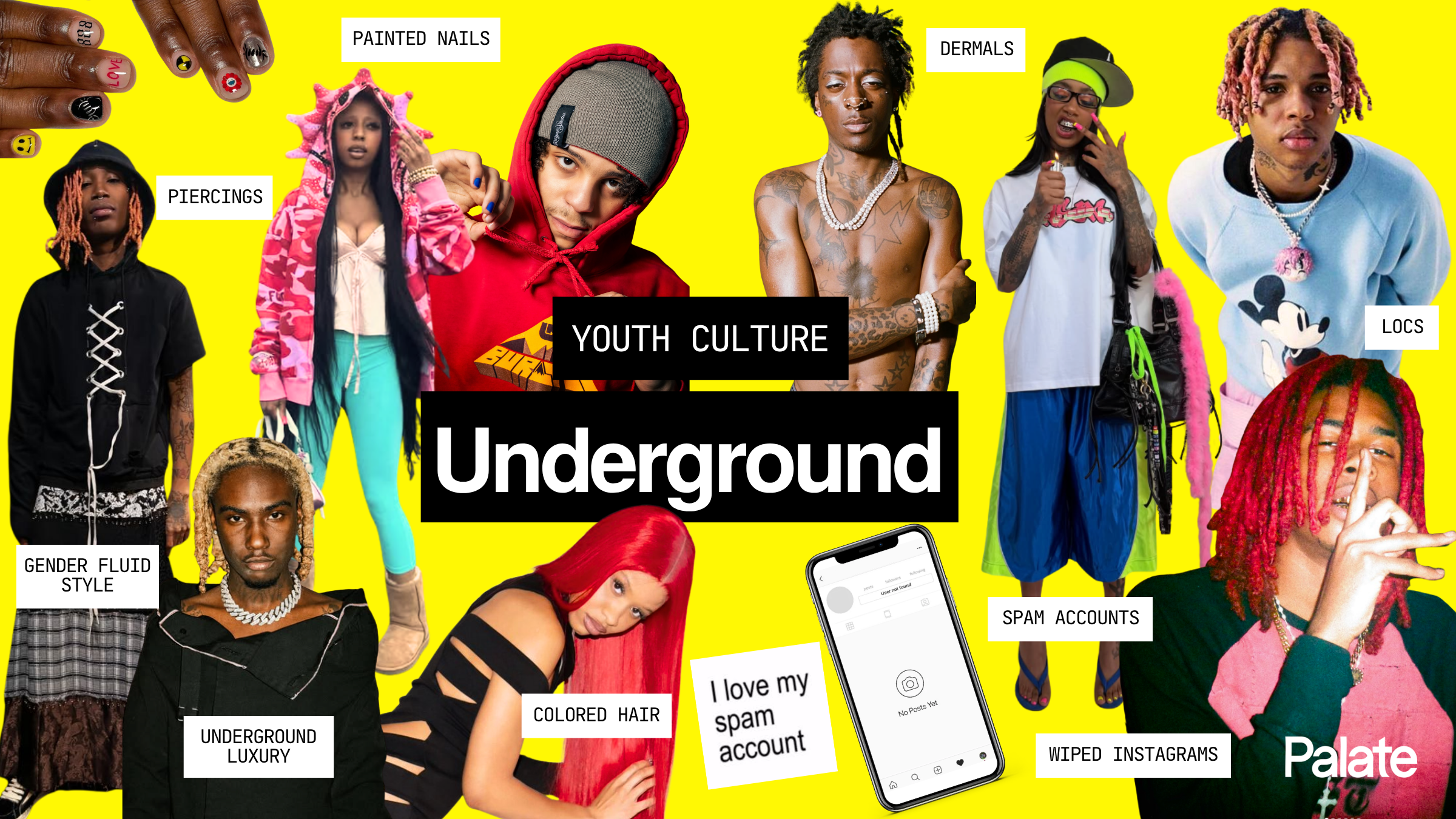
At the same time, the underground is developing its own visual and cultural language. Artists including Baby Osama, xaviersobased, skaiwater, BKTHERULA, Babyxsosa, OsamaSon, and others exist within an aesthetic that can encompass spam accounts, wiped Instagrams, underground luxury, colored hair, locs, piercings, dermals, painted nails, and gender-fluid styling.
These aren’t simply fashion choices. They function as community signals.
Previous generations communicated identity through regional sounds, clothing, slang, labels, magazines, and local scenes. Today’s underground communities do something similar through music, fashion, social platforms, and digital behavior.
The tools changed. The instinct to build culture around a shared identity did not.
Where Is the Next Rap Superstar?
This may be the wrong question.
The old system concentrated attention. The current system distributes it. Instagram, TikTok, YouTube, Spotify, SoundCloud, and other platforms can each create different cultural centers, which means everyone increasingly gets their own version of what matters.
For labels and executives accustomed to mass-market signals, that fragmentation can be difficult to interpret. For artists, it can be liberating.
You don’t necessarily need everybody anymore. You need enough of the right people.
Five Global Superstars or 500 Artists Making a Living?
Would rap be healthier with five global superstars or 500 artists making a living?
Those outcomes aren’t mutually exclusive. Rap can still produce global icons while supporting hundreds of artists with smaller, highly committed audiences.
The real shift is expanding the definition of success beyond fame itself. The future may be less about finding the next Drake and more about building an ecosystem where many different versions of a successful rap career can exist simultaneously.
That doesn’t make superstardom irrelevant. It makes it one destination among many.
Common Mistakes Artists Make in the New Rap Economy
The biggest mistake is confusing visibility with fandom. Views, followers, streams, and festival crowds can demonstrate exposure without proving that people will repeatedly invest in an artist.
Another is trying to be everywhere at once. Artists can spend enormous amounts of energy chasing every platform instead of identifying where their actual community gathers and strengthening that relationship.
Broad appeal can also be mistaken for growth. In a fragmented culture, specificity may be exactly what gives an audience something to identify with. And the “1,000 True Fans” idea shouldn’t be treated as a literal financial formula. The principle matters more than the number: build recurring relationships with people who genuinely care.
The Artist Audience-Building Checklist
Identify the platforms where your actual fans participate, not merely watch.
Track ticket buyers, repeat listeners, merch buyers and direct contacts alongside follower counts.
Define the visual and cultural signals that make your community recognizable.
Build pathways from discovery → listening → following → participating → purchasing.
Test live demand at the appropriate venue size instead of chasing optics.
Give superfans reasons to stay involved between releases.
Measure repeat behavior, not just viral spikes.
Build at least one direct audience channel you can reach without depending entirely on an algorithm.
Key Takeaways
Rap isn’t disappearing. It is becoming more fragmented, specialized, and community-driven. Algorithms and online communities have multiplied the ways artists are discovered, while an expanding network of subgenres allows highly specific scenes to coexist.
Touring reveals demand at every level, from clubs to stadiums, and smaller but deeply invested fanbases can create meaningful careers without universal recognition. Mass superstardom still matters, but it no longer has to be the only destination.
The next generation of successful rappers may include global icons alongside hundreds of artists whose names aren’t universally recognized but whose audiences care enough to sustain real careers. That may ultimately create a stronger ecosystem than one dependent on a handful of stars.
Frequently Asked Questions
Is rap dying in 2026?
Rap’s fragmentation can make the genre look weaker when measured only against traditional mainstream indicators. But the proliferation of subgenres, scenes, and artist communities suggests something different: rap is diversifying rather than simply disappearing.
Why aren’t there as many new rap superstars?
Discovery is increasingly fragmented across platforms and algorithms. Different audiences encounter different artists, making the universal cultural recognition once created by radio and mass media harder to achieve.
Can an independent rapper make a living with 1,000 fans?
Potentially, but 1,000 isn’t a guaranteed threshold. The economics depend on fan spending, margins, direct relationships and an artist’s expenses. The more useful lesson is that a relatively small group of highly engaged supporters can be more valuable than a much larger passive following.
Are streaming numbers enough to measure an artist’s success?
No. Streaming demonstrates consumption, while ticket sales, merchandise, repeat engagement, and direct fan relationships reveal different and often deeper forms of demand.
Why are small rap shows important?
Small headline shows demonstrate concentrated demand. A packed room of intentional ticket buyers tells you something different from an artist performing for a large festival audience that was already assembled.
Will rap still create global superstars?
Yes. The argument isn’t that superstardom disappears. It’s that rap’s ecosystem can support many more definitions of success beneath it.
Rap’s Future Is Bigger Than Superstardom
Rap’s future may not belong to one artist, one sound, or one cultural conversation. That is precisely what makes this moment interesting.
The same fragmentation that makes the music business harder to navigate has created thousands of pathways between artists and audiences. Success can now mean global recognition, but it can also mean a smaller community that buys tickets, supports releases, participates in culture, and stays invested over time.
The industry’s next challenge is learning to value depth of connection alongside scale of attention.
