The Art of the Rollout: What Makes a Music Campaign Actually Connect
There is more advice about building an artist than ever. There’s a YouTube video for everything, a carousel for this, a course for that, a chatbot, an agent, and a seemingly endless stream of people explaining what artists should post, where they should spend, when they should release, and how they should market themselves.
But information is not the same as perspective. Nothing replaces someone who can actually see the artist.
That distinction has been on our minds lately while watching Zara Larsson. For the first time in a while, we watched a rollout and thought: this is actually inspiring. Not because there was one groundbreaking marketing tactic to copy, but because the entire thing made sense. The music, visuals, personality, collaborations, partnerships, and cultural moments all seemed to belong to the same world.
That’s the difference between promoting a release and building an artist.
Quick Answer: What Makes a Great Music Rollout?
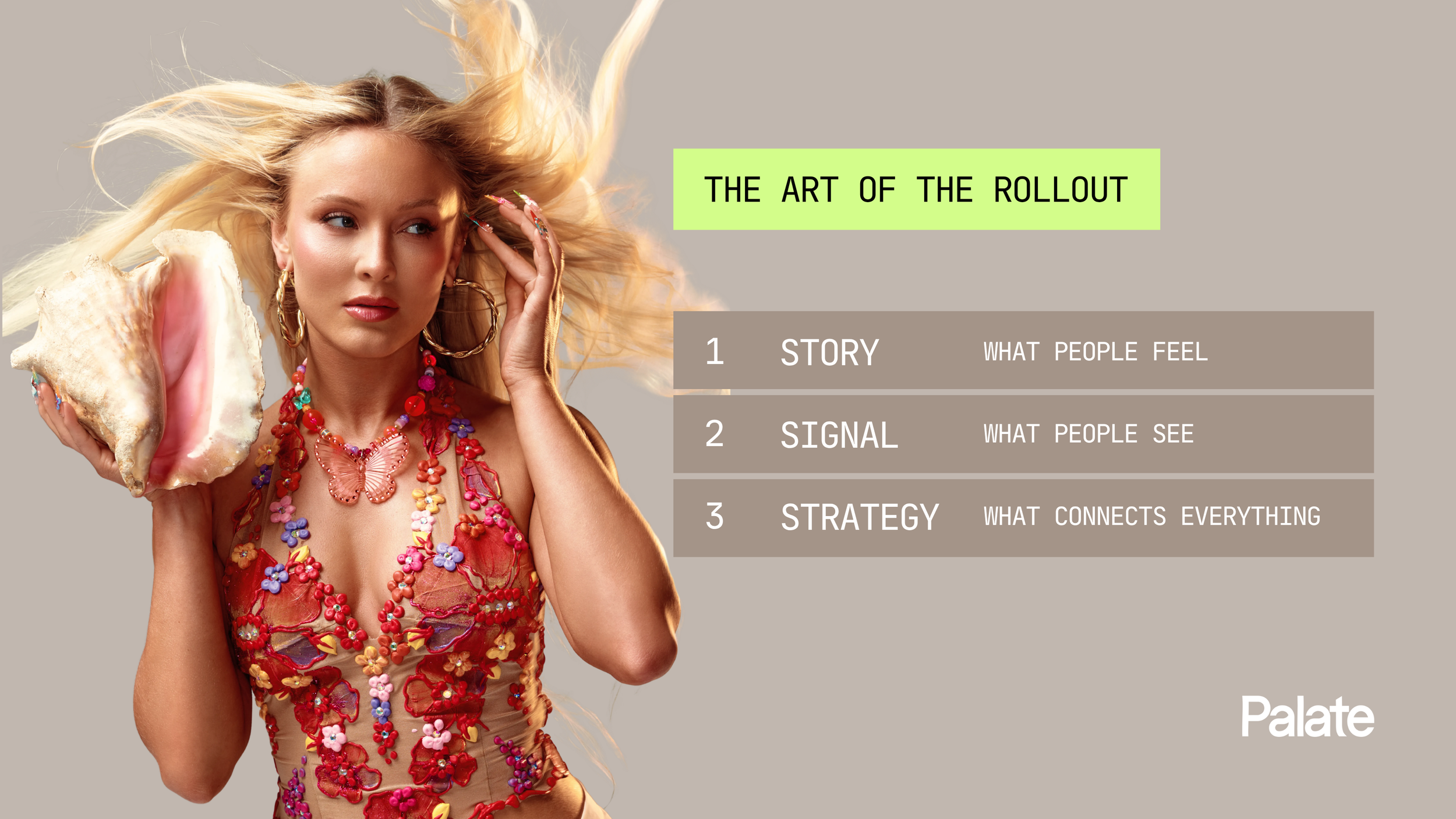
A great rollout starts before the marketing plan. It begins with what we call Right Look. Right Song. Right Story. Those three elements create the foundation of a memorable artist brand. Once they are clear, the rollout can expand outward through Story. Signal. Strategy.
Story is what people feel. Signal is what people see. Strategy is what connects everything. And importantly, they work in that order.
When all of those pieces reinforce one another, audiences don’t have to work particularly hard to understand an artist. They just do.
Explore The Art of the Rollout Visual Report
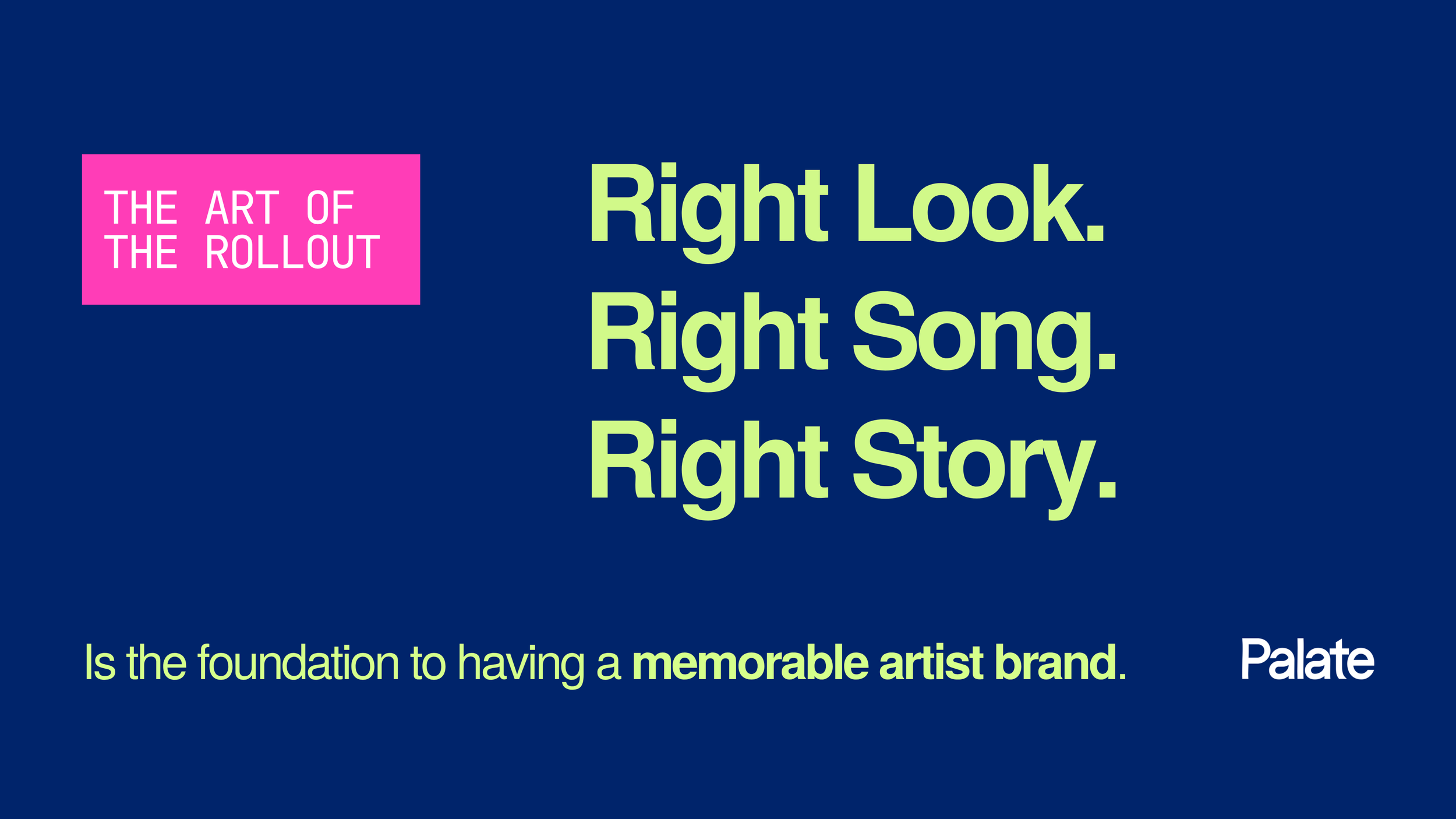
Right Look. Right Song. Right Story.
Before talking about press, content, partnerships, or campaign ideas, there needs to be something worth amplifying. For Palate, that foundation is Right Look, Right Song, Right Story. These aren’t three separate branding exercises. They work together to create recognition and give everything that follows somewhere to land.
Right Look
A strong artist look does more than make someone look good. It tells you what world you’re entering. Color, styling, hair, makeup, typography, photography, texture, movement, and energy all become part of a visual language.
With Zara Larsson’s current world, that language is immediately legible. There’s saturated color, playful femininity, Y2K nostalgia, beach imagery, sparkle, butterflies, dolphins, and a heightened pop sensibility. None of those things individually define the artist, but together they create a world you recognize before anyone has to explain it.
That’s what the right look should accomplish. The question isn’t simply, Does the artist look good? It’s whether the visual identity feels specific enough that it could only belong to them.
Right Song
The visual world then has to connect to the music. Otherwise, it’s decoration.
The right song gives the visual identity something to attach itself to and gives a new listener an entry point into the artist. This is where rollout strategy can easily get backwards. Teams can spend months designing campaign assets around music that doesn’t clearly communicate what they want audiences to understand about the artist.
A great visual cannot permanently solve a song-positioning problem. The music and the world surrounding it should feel as though they came from the same person.
Right Story
Then comes the story: Why this artist? Why this music? Why this moment?
With Zara, the answer is easy to read. The visual world, music, personality, and cultural references reinforce one another enough that you quickly understand who she is, how she moves, and why this particular era exists now. Nothing feels especially random, and that clarity is part of why the rollout connects.
Story Comes Before Signal
Once the artist foundation is clear, the campaign can expand outward. But the order matters.
Story is what people feel. It is the emotional understanding of the artist underneath the campaign, and it is larger than an album concept or marketing tagline. An artist’s story includes personality, worldview, history, references, taste, ambition, contradictions, and the things that make someone worth paying attention to beyond a single song.
A good rollout reveals and reinforces that story. It shouldn’t have to manufacture one from scratch.
That distinction becomes especially important now that artists have access to so many promotional tools. It is possible to generate enormous amounts of activity around someone without making that person any clearer to the audience. The story gives all of that activity meaning.
Signal Is What People See
Once the story is clear, you need signals that reinforce it. This is where traditional music marketing can become fragmented. Press is handled by one person, brand opportunities arrive somewhere else, collaborations happen organically, and events live in another calendar. Each opportunity gets evaluated individually.
But audiences don’t experience an artist’s career as departments. They see everything at once.
That’s why Palate looks at Press, Collaborations, Events, and Brands as one interconnected Signal System. These aren’t four unrelated marketing strategies. They’re four different ways of communicating and reinforcing the same artist identity.
Press can create context and credibility, but publicity is only one signal and it isn’t always the first one an artist needs. A feature can amplify a compelling story that already exists, but it cannot necessarily create an artist identity from nothing. Instead of automatically asking, Do I need a publicist?, the better question may be: What signal does this artist need next?
Collaborations work similarly. Who an artist chooses to work with tells audiences where they belong musically and culturally. The strongest collaborations do more than transfer reach from one audience to another; they make sense within the larger artist story.
Events can turn that story into something physical. A meaningful event doesn’t necessarily have to be a traditional concert. It could be a party, pop-up, listening experience, festival moment, or another gathering that allows people to enter the artist’s world in real life.
Brand partnerships are signals too. The right partnership can communicate taste, lifestyle, and cultural positioning without requiring a paragraph of explanation. The wrong one can muddy an otherwise clear identity. The question isn’t simply whether a brand wants to work with the artist, but whether that partnership makes the artist’s world clearer.
Zara Larsson and the Signal System
This is what makes Zara Larsson such a useful example. Her current rollout isn’t asking one channel to do all the work. Press, collaborations, events, and brands are reinforcing the same world.
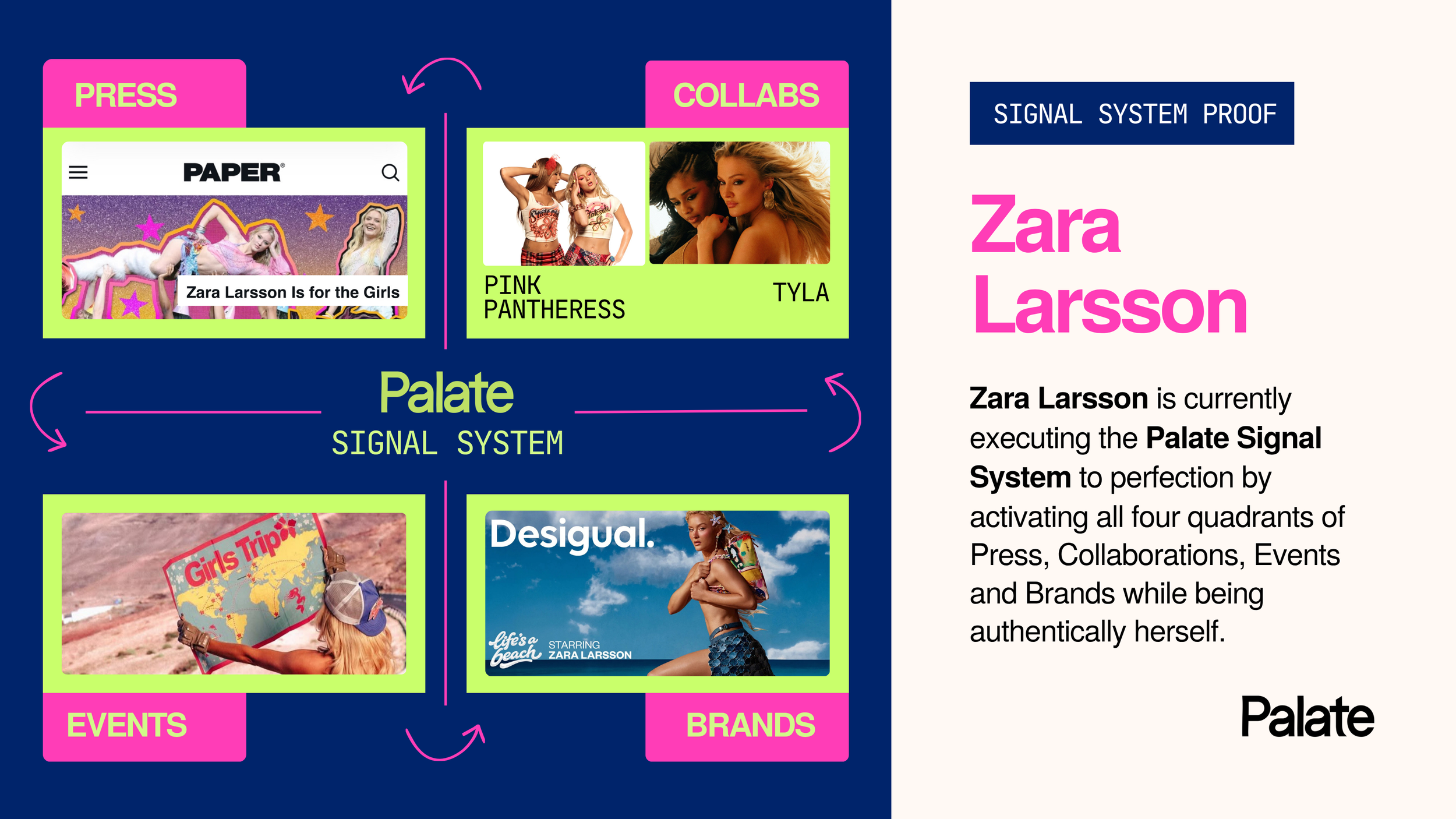
The press reflects the identity she has already established. Collaborations with artists such as PinkPantheress and Tyla make sense within her positioning. Events extend the playful, hyper-feminine world into physical experiences, while brand partnerships such as Desigual share the same visual and cultural language. The individual activations are useful, but the real strength becomes obvious when you look at them together.
They all point in the same direction.
That is the objective of the Signal System. When the signals work together, people know exactly who you are. When they don’t, people can see everything you’re doing and still understand nothing. That distinction is central to the framework presented in the original case study.
Strategy Is What Connects Everything
Story creates meaning and signal makes that meaning visible. Strategy determines what happens when.
This is where a rollout becomes more than a collection of good ideas. Strategy is deciding what goes first, what feeds what, what can wait, and what should be ignored. Sequencing matters because every opportunity is not equally valuable at every moment.
A press campaign might be useful once a story has started gaining traction but premature before the artist identity is clear. A collaboration might provide a stronger introduction than an interview. An event could generate the cultural proof that later makes press more interested. A brand partnership might beautifully extend an existing world or distract from one that hasn’t been established yet.
Good strategy is not doing everything available to you. It’s understanding what needs to happen next.
Why More Marketing Doesn’t Always Create More Results
One of the easiest traps in a rollout is confusing activity with momentum. A team can create more posts, interviews, content, partnerships, appearances, and campaign moments and still fail to make the artist any clearer.
If those things don’t reinforce one another, the audience is receiving volume without clarity. That’s how a campaign can look extremely busy from inside the team while barely moving the artist forward outside of it.
When something isn’t converting, the instinct is often to add more. More content. More spend. Another tactic. Another platform. But sometimes the more useful question is whether the existing pieces are actually connecting.
Common Rollout Mistakes
One of the most common mistakes is starting with tactics instead of the artist. A content calendar cannot replace a clear look, song, and story, just as an expensive visual identity cannot compensate for music that doesn’t provide a strong entry point.
Another is assuming publicity should always come first. Press is one signal within a much larger system, and an artist may need a collaboration, event, or another form of cultural proof before traditional publicity can do its best work. The same principle applies to brand partnerships and collaborations: reach is only useful when the association reinforces where the artist is trying to go.
There is also a tendency to mistake volume for strategy. Doing everything at once can make a campaign feel important internally while making it harder for an audience to understand what actually matters. Strategy is sequencing, not volume.
The Art of the Rollout Checklist
Before launching a campaign, ask whether the artist’s look is recognizable and specific, whether the song provides the right entry point, and whether the story can be understood without a lengthy explanation. Then look outward. What signals are already working? Does the artist actually need press right now? Which collaborations reinforce the positioning? What kind of event naturally belongs in this world? Which brands make the artist identity clearer?
Finally, look at the sequence. What needs to happen first? What should happen next? What can wait? What should be ignored?
If those answers aren’t clear, adding more tactics probably won’t fix the campaign.
Key Takeaways
The art of the rollout isn’t about finding the perfect marketing template. It’s about understanding the artist well enough to know what belongs and what doesn’t.
Start with Right Look. Right Song. Right Story. Then build outward through Story. Signal. Strategy.
Story gives the audience something to feel. Signal makes that identity visible across press, collaborations, events, and brands. Strategy makes sure those pieces arrive in an order that allows each one to strengthen the next.
The best rollout doesn’t make people notice how much marketing is happening.
It makes them understand the artist.
Frequently Asked Questions
What Is a Music Rollout?
A music rollout is the coordinated strategy surrounding a release, including how the music, visuals, content, press, collaborations, events, partnerships, and other campaign elements are introduced and sequenced.
What Should Come First in a Music Rollout?
Artist clarity should come before tactics. Establishing the Right Look, Right Song, and Right Story gives the rest of the campaign a clear foundation. From there, the rollout can expand through Story, Signal, and Strategy.
Does Every Artist Need a Publicist?
No. Publicity is one potential signal within a larger marketing system. Whether an artist needs press depends on their current story, positioning, audience, and campaign objectives.
What Is the Palate Signal System?
The Signal System connects four areas—press, collaborations, events, and brands—so that each reinforces the same artist identity rather than operating as an unrelated marketing tactic.
Why Do Some Artist Rollouts Feel More Cohesive Than Others?
Usually because the music, visual identity, story, and external signals reinforce one another. Cohesion makes it easier for audiences to understand who the artist is and what world they are being invited into.
What Makes a Good Artist Brand?
A memorable artist brand creates both recognition and meaning. The visual language, music, and story should feel specific enough that audiences begin to understand the artist without needing every decision explained.
Explore the Master Case Study
The Art of the Rollout is part of Palate’s The State of the Music Business 2026 series. Go deeper with the Master Case Study.
