
The State of the Music Business 2026: Master Case Study
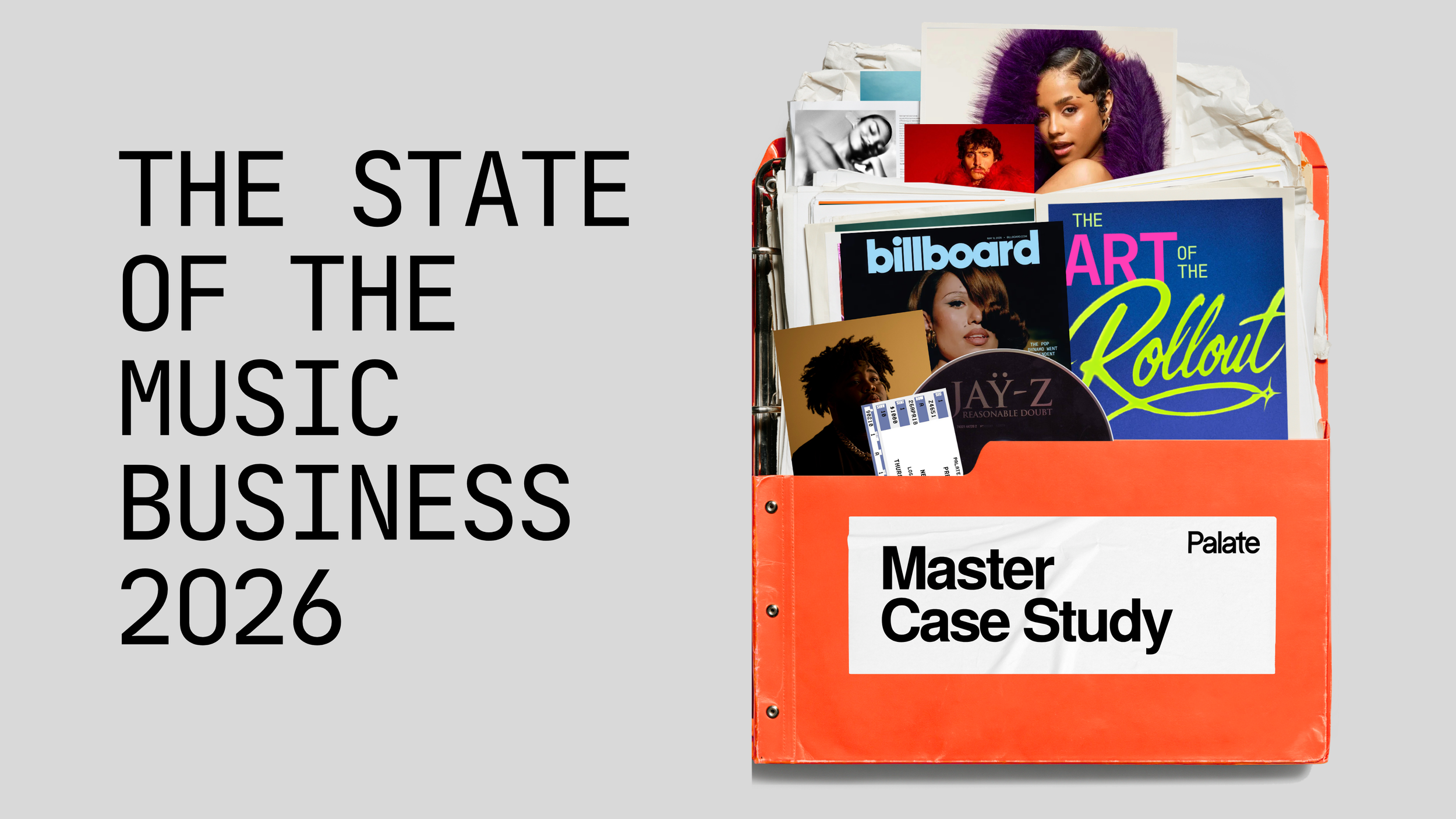
The music business did not disappear. The path through it did.
For decades, the industry operated around access. A&R discovered artists. Labels funded records. Radio, press, and distribution helped determine what reached the public. Gatekeepers controlled entry, and getting through the right door could change a career.
That system has been replaced by something much less linear. Artists now have unprecedented access to distribution, audiences, and creative tools. They can release music globally without a label, build communities without traditional media, and reach millions of people from a phone.
But access to the tools has not made building a sustainable career easier. The old gatekeepers have largely been replaced by platforms, algorithms, attention cycles, and an overwhelming number of choices. Everyone can participate. Far fewer people know how to turn that participation into something that compounds.
That is the central tension behind The State of the Music Business 2026.
Quick Answer: What Changed in the Music Business?
The old model rewarded access. The current model rewards attention. The emerging model rewards ownership.
For artists, that means visibility alone is no longer enough. A viral moment, strong streaming numbers, or a large social following can create attention without creating an actual business.
The artists building sustainable careers are connecting several things at once: Artist Development → Right Look, Right Song, Right Story → Artist Level, Marketing Budget, Release Partner → Story, Signal, Strategy → Audience Ownership → Community → Revenue → Reinvestment.
The individual pieces matter. The advantage comes from understanding how they work together.
Explore The State of the Music Business 2026: Master Case Study Visual Report
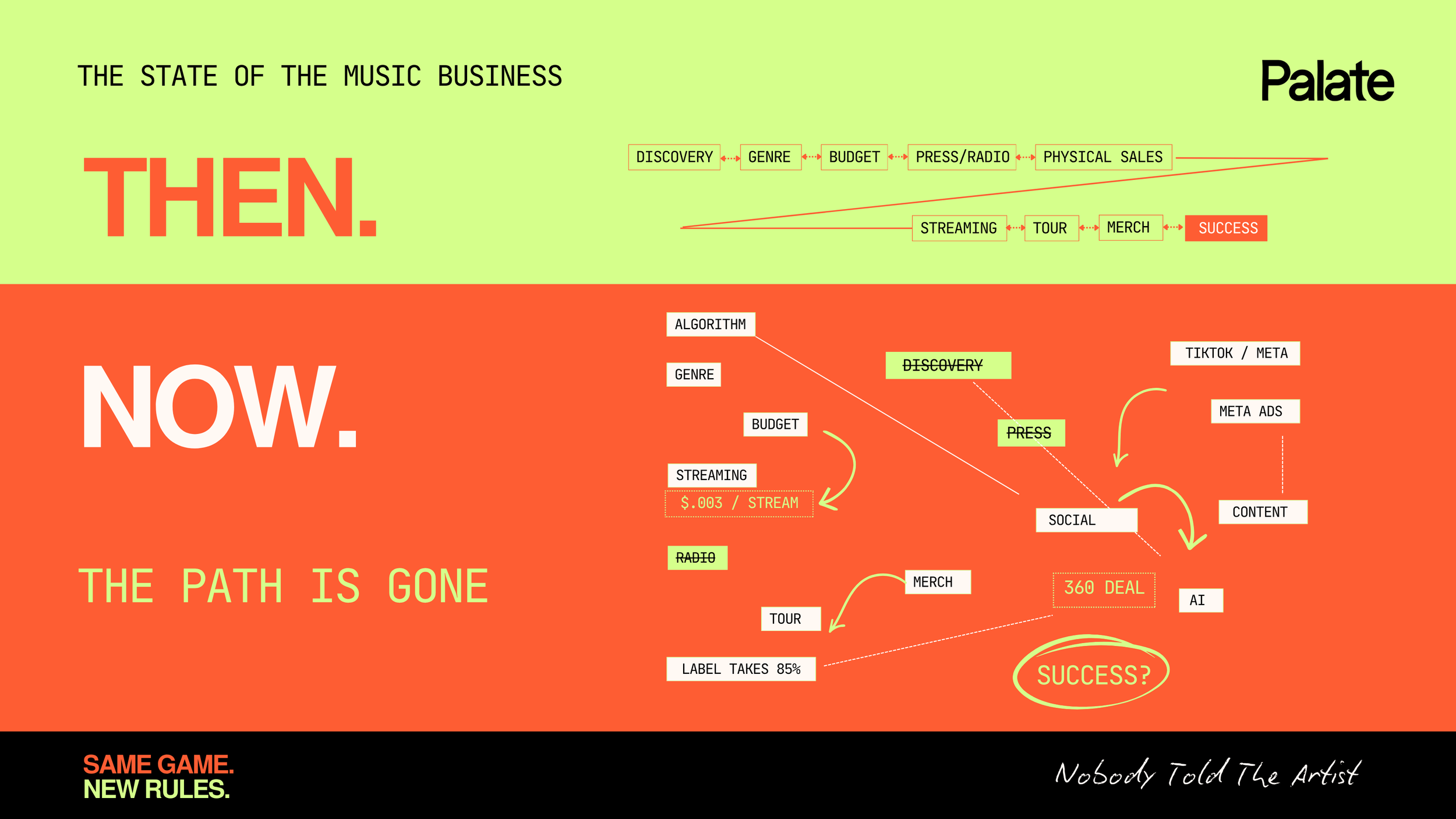
The Path Is Gone
There used to be a recognizable sequence: discovery, development, budget, press and radio, distribution, touring, success. That process was imperfect and heavily gatekept, but artists generally understood where they were trying to go.
Today, an artist might simultaneously be thinking about streaming, TikTok, touring, content, advertising, merch, algorithms, AI, distribution, brand partnerships, and direct-to-fan strategy, with no universal order for how those pieces should work.
That abundance of opportunity can feel strangely disorienting. The rules changed, but nobody stopped the business to explain the new ones.
The implication is important: copying the tactics of a successful artist is increasingly useless without understanding the system underneath them.
Culture Is Part of the Strategy
Music marketing does not exist outside the world people are living in. Audiences are navigating higher costs of living, expensive live entertainment, rapidly changing technology, shrinking media institutions, and broader economic uncertainty. That environment changes what connects.
Relatability itself is being redefined. Audiences are not necessarily looking for artists to simply project aspiration. They increasingly respond to artists who appear to understand the cultural room they are walking into.
The same applies to touring. A fan can love an artist and still decide that a ticket, transportation, food, and fees do not fit into their budget. Developing artists cannot assume touring automatically functions as a reliable revenue engine simply because it was historically considered an essential career milestone.
Strategy starts with understanding the environment, not pretending it does not exist.
Artist Development Did Not Become Less Important
One of the biggest shifts in the business is that artists are increasingly expected to arrive developed. Historically, artist development included talent, music, image, positioning, promotion, and long-term strategy. Today, artists are often expected to establish much of that foundation before serious industry investment arrives.
There is a reasonable middle ground. An artist coming to the table in 2026 should have meaningful development around the talent, music, and image. But a strong partner should still add value through positioning, relationships, promotion, access, and strategy. If an artist needs to walk through the door with every element already complete, it becomes fair to ask what the partner is actually bringing.
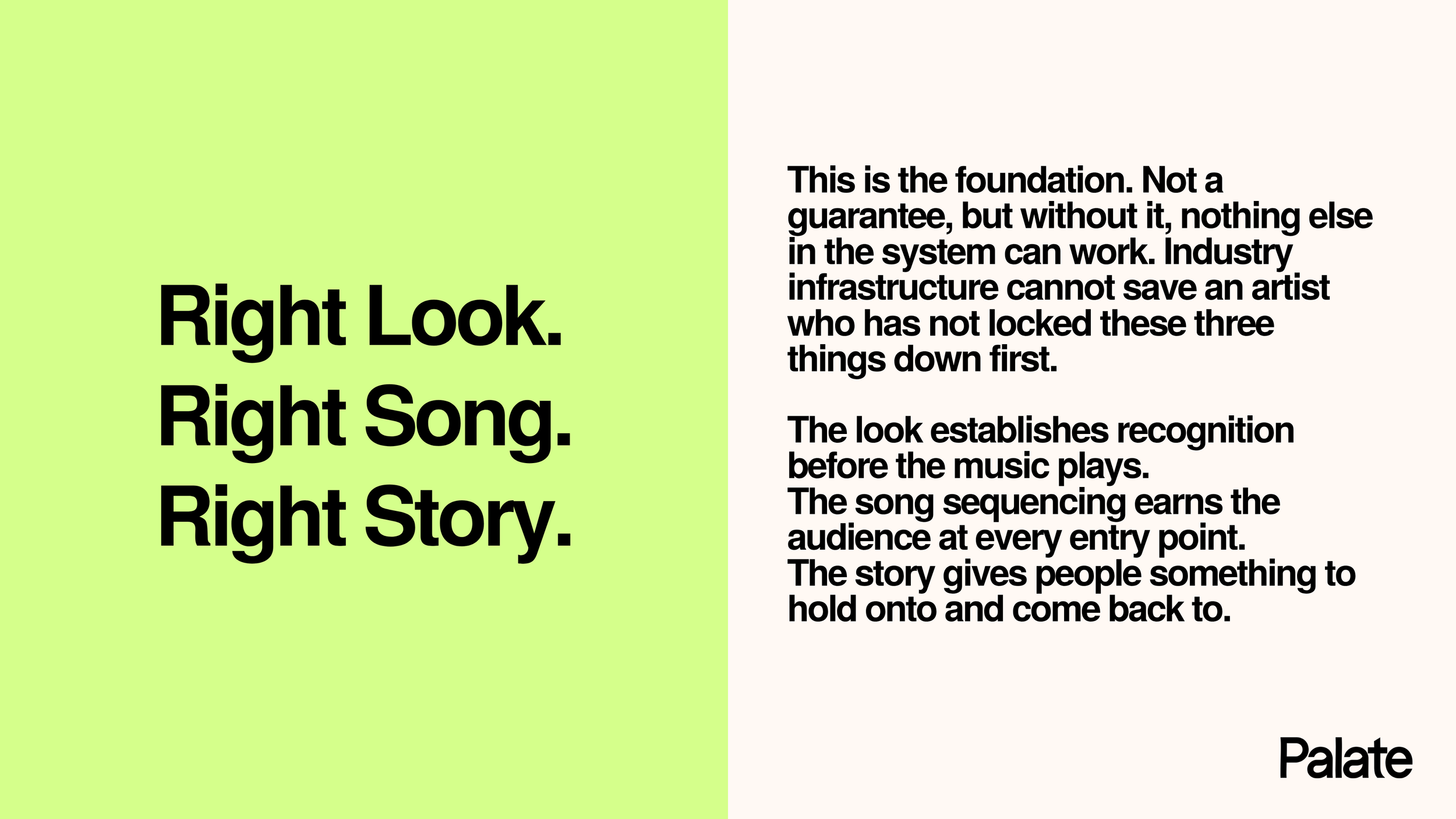
For the artist, the foundation comes down to three things: Right Look. Right Song. Right Story.
The right look is recognition design: the visual language that allows an audience to identify an artist before the music even starts. The right song is about understanding that songs have different roles. One might introduce the artist, another adds depth, and another turns curiosity into fandom.
Then there is the right story. The look earns recognition. The song earns the listen. The story gives people something to stay for. A strong project has a narrative that can be understood without requiring audiences to decode every piece of content surrounding it.
These three pieces do not guarantee success. They create a foundation that makes everything afterward more effective.
Why Most Music Rollouts Fail
A rollout often fails before anyone sees it. The problem is not always bad creative or bad music. It is frequently misalignment between three variables: Artist Level, Marketing Budget, and Release Partner.
An emerging artist and an established artist cannot use the same strategy. A $5,000 campaign and a $250,000 campaign cannot be built from the same blueprint. A distributor, indie label, and major label do not provide the same infrastructure.
Yet online music advice routinely strips away those distinctions. That is how developing artists end up copying campaigns created for superstars, or teams spend large portions of limited budgets manufacturing moments before an audience exists to receive them.
Money does not fix the underlying problem. It amplifies what is already working.
Story. Signal. Strategy.
Once the artist foundation and rollout variables are understood, another framework connects the system: Story. Signal. Strategy.
Story is what people feel. It includes where the artist comes from, what they care about, their references, worldview, personality, and the emotional identity surrounding their work. A project has a narrative. An artist has a story. Those things are related, but they are not identical.
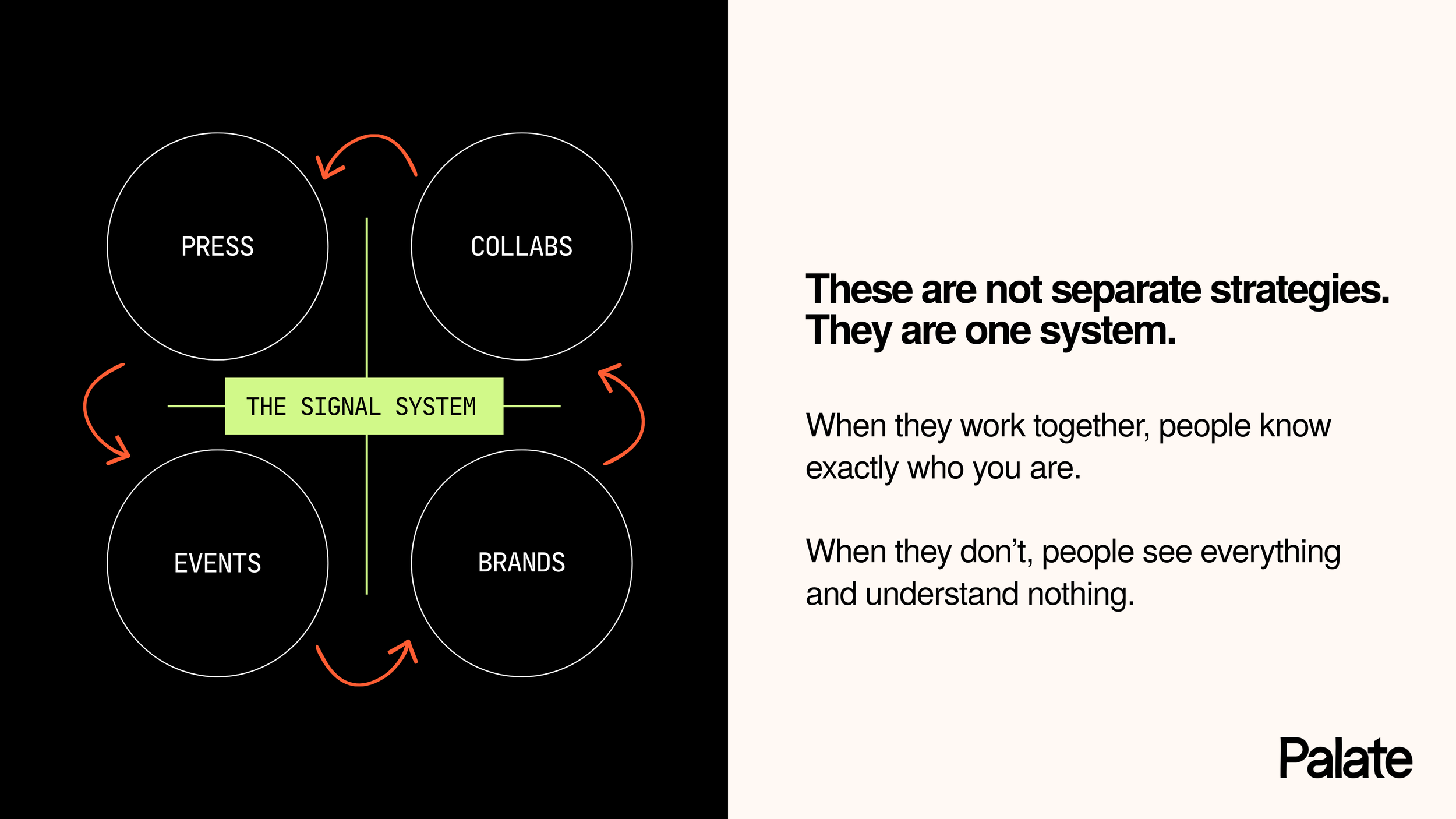
Signal is what people repeatedly see. Press, collaborations, events, and brands should not operate as four unrelated marketing departments. Together, they create a signal system. Press can establish credibility, collaborations create co-signs and audience crossover, events create physical energy, and brand partnerships communicate lifestyle and positioning.
When those signals reinforce the same identity, the public begins to understand the artist without being explicitly told what to think.
Strategy is how everything connects. It determines what happens first, what can wait, what deserves the budget, and what looks urgent but actually does not matter. Content can be produced before the story is clear. Press can begin before enough audience exists to validate the narrative. Money can be spent before anyone has determined what level the artist is actually operating at.
Strategy closes the distance between activity and results.
The Artist as a Start Up
The final argument is not that every artist needs to become an entrepreneur obsessed with metrics. It is that a modern artist career increasingly operates like a company.
The music is the product. The audience is the market. The story is the brand. The signal system is the marketing.
From there, the business becomes a flywheel: Content → Attention → Audience → Ownership → Community → Revenue → Reinvestment.
Content creates attention, and attention creates an audience. But the crucial transition happens when some of that audience moves from rented platforms into spaces the artist can reach directly, including email, SMS, and community.
Ownership can deepen into community, which can then support tickets, merchandise, streaming, partnerships, and other revenue. Revenue is reinvested into the next cycle.
The objective is not to restart from zero with every release. It is to make each cycle strengthen the next one. That distinction between building moments and building something that compounds may be the most important shift of all.
Common Mistakes Artists and Teams Make
One of the most common mistakes is building the rollout before building the artist. Marketing cannot permanently compensate for an unclear identity. Teams also copy established-artist strategies at the emerging level, even though strategy should reflect the artist’s actual audience, awareness, and resources.
Followers can also be confused with ownership, even though platform reach can disappear when algorithms change. Press, collaborations, events, and brands are often treated as unrelated opportunities rather than signals that should reinforce the same story.
Finally, spending money does not automatically manufacture momentum. Budget amplifies proof. And if every new release requires starting from zero again, the system is not compounding. A sustainable campaign should leave the artist with more audience, data, catalog value, and community than they had before it.
The 2026 Artist Career Checklist
Before building the next rollout, ask:
Is the look recognizable?
Do the songs have clear roles?
Can someone explain the project’s story simply?
What level is the artist actually at today?
What can the available budget realistically sustain?
Is the release partner appropriate for that level?
Are press, collaborations, events and brands sending the same signal?
Does the artist have meaningful direct audience ownership?
Is the catalog being treated as a long-term asset?
Does revenue feed the next cycle instead of disappearing after the campaign?
Key Takeaways
The music business is not moving back toward the old system. Gatekeeping gave way to platforms. Platforms created an attention economy. The next competitive advantage is building enough ownership that a career is not completely dependent on either one.
That means the goal is no longer simply getting seen. It is creating an artist people recognize, music people return to, a story people care about, a system that reinforces that identity, and a community that can travel with the artist regardless of what platform becomes important next.
The new definition of winning is not one enormous moment. It is being able to keep building after the moment passes.
Winning in 2026 means owning your audience, understanding your system, and continuing to build regardless of what the platforms decide to prioritize next.
Frequently Asked Questions
Is the Record Label Model Dead?
No. Labels still offer financing, relationships, promotion, infrastructure and scale. The question is increasingly what value the partnership adds to an artist who already has substantial development underway.
Do Independent Artists Need to Build Everything Themselves?
Independence offers control, but that control comes with responsibility. Distribution does not automatically provide development, strategy, marketing or audience-building infrastructure.
What Matters More: Music or Marketing?
They are not substitutes. Strong marketing cannot permanently compensate for an undeveloped artist, and great music still needs a system that helps people discover, understand and return to it.
Does an Artist Need a Huge Audience Before Releasing Music?
No. Strategy should match the artist’s current level. An emerging artist needs repetition, clarity and proof more than an oversized rollout.
What Does “Own Your Audience” Mean?
It means creating ways to maintain a direct relationship with fans beyond algorithm-dependent platforms, through tools such as email, SMS and owned community spaces.
What Is the Most Important Thing to Build First?
The foundation: Right Look. Right Song. Right Story.
Everything else has somewhere to land once those pieces are working together.
The New Definition of Winning
The music business still creates enormous opportunities. What has disappeared is the assumption that one prescribed path will reliably lead artists toward them.
The artists best positioned for the next era will understand how development, rollout strategy, storytelling, signals, audience ownership, and revenue work as one connected system. They will use platforms without building careers completely dependent on them and treat each release as an opportunity to strengthen what comes next.
The goal is not simply visibility. It is momentum that compounds.
Go Deeper Into The State of the Music Business 2026: Master Case Study
This article is the condensed version of Palate’s 55-page State of the Music Business 2026 Master Case Study, which explores the system shift, cultural context, artist development, rollout mechanics, Story. Signal. Strategy. framework, and emerging artist-as-startup model.
